
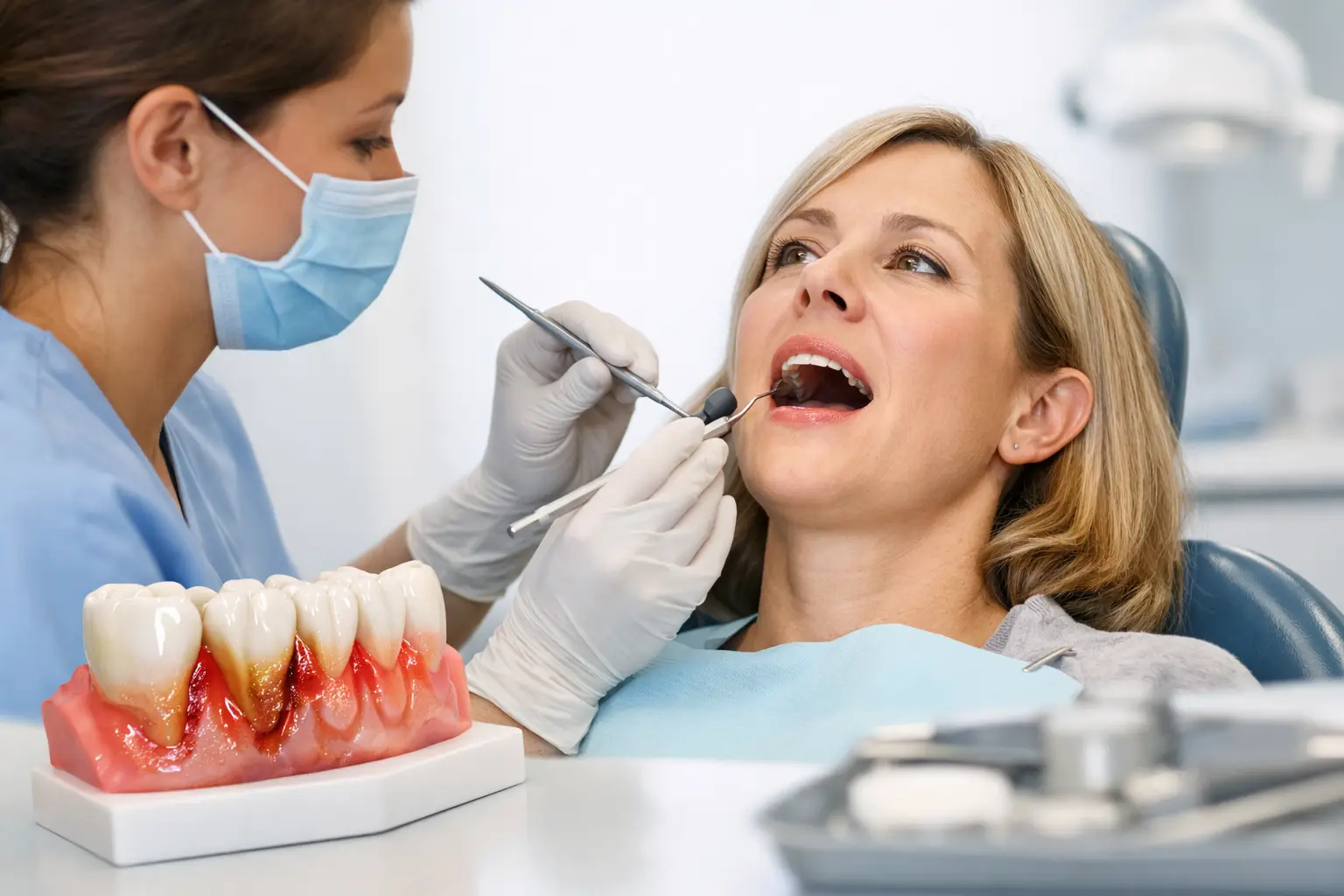
Whether you live right here in Riverside, commute from Wood Streets, Orangecrest, or Canyon Crest, or travel from nearby Corona or Moreno Valley, getting early periodontal care close to home is key to preserving your natural teeth. Bleeding when you brush is easy to brush off. A little tenderness, a little bad breath, maybe some swelling – many people assume it will pass. This gum disease treatment guide is here to make one thing clear: early treatment is simpler, more comfortable, and far less expensive than waiting until the problem affects your teeth, bone, and daily life.
Gum disease does not always start with pain. In fact, that is part of what makes it so easy to ignore. By the time gums feel noticeably sore or teeth start to loosen, the infection may already be more advanced. The good news is that modern dental care offers effective ways to stop the disease, control the infection, and help protect your smile.
What gum disease really is
Gum disease is an infection and inflammation of the tissues that support your teeth. It usually begins when plaque and bacteria collect along the gumline. If that buildup is not removed thoroughly, the gums can become irritated and inflamed.
The earliest stage is gingivitis. At this point, gums may look red, puffy, or bleed during brushing and flossing. Gingivitis is often reversible with professional cleaning and better home care.
If the infection progresses, it can turn into periodontitis. This is a more serious stage where the gums start pulling away from the teeth, creating pockets that trap more bacteria. Over time, the supporting bone can break down. That is when people may notice gum recession, chronic bad breath, sensitivity, shifting teeth, or loose teeth.
Signs you should not ignore
Some symptoms are subtle, and some are easier to dismiss than they should be. Bleeding gums are one of the most common early warning signs. Healthy gums generally do not bleed regularly from normal brushing or flossing.
Other signs include swollen or tender gums, persistent bad breath, a bad taste in the mouth, gum recession, pain when chewing, and teeth that feel different when you bite down. If your teeth seem longer than they used to, your gums may be receding. If a tooth feels slightly mobile, that deserves prompt attention.
It also matters if you have risk factors. Smoking, diabetes, dry mouth, certain medications, hormonal changes, and a history of inconsistent dental care can all raise your risk. Stress and clenching can make gum problems harder to manage as well.
Gum disease treatment guide: how dentists choose the right care
There is no single treatment that fits every case. The right plan depends on how advanced the disease is, how deep the gum pockets are, whether bone loss is present, and how well you can maintain the area at home.
For mild gum disease, a professional cleaning and improved brushing and flossing habits may be enough. If plaque and tartar are mostly above the gumline and there is no deeper attachment loss, this conservative approach can work very well.
For more advanced cases, a standard cleaning is usually not enough. Bacteria and hardened deposits may be hiding below the gumline, where they continue to irritate the tissue and damage support around the teeth. In that situation, deeper treatment is often needed.
Professional cleanings for early-stage disease
If your gums are inflamed but the disease is still in its earliest stage, your dentist may recommend a thorough cleaning followed by a home care reset. That usually means better brushing technique, flossing or interdental cleaning, and sometimes an antibacterial rinse.
This stage is where patients often see the fastest improvement. Bleeding can lessen, swelling can go down, and gums can look healthier within a short period of time when the infection is addressed early.
Scaling and root planing
When gum disease has moved below the gumline, scaling and root planing is one of the most common treatments. You may hear it called a deep cleaning. This is different from a routine cleaning because it targets buildup and bacteria under the gums.
Scaling removes plaque and tartar from tooth surfaces and from within the gum pockets. Root planing smooths the root surfaces so the gums can reattach more easily and bacteria have fewer places to cling.
Many patients are nervous about this treatment, but it is typically very manageable. Local anesthetic can be used to keep you comfortable, and treatment may be completed in sections depending on how many areas need care. Mild soreness afterward is common, but most people return to normal activities quickly.
Antibiotic therapy and antimicrobial support
In some cases, your dentist may recommend antibiotics or localized antimicrobial medication along with deep cleaning. This can help reduce bacterial activity in stubborn areas, especially when pockets are deeper or inflammation is more difficult to control.
Antibiotics are not a substitute for cleaning infected areas. They are usually an added tool, not the main treatment. That distinction matters because gum disease is driven by bacterial biofilm and hardened deposits that have to be physically removed.
Ongoing periodontal maintenance
One of the biggest misunderstandings about gum disease is thinking treatment is finished after one deep cleaning. For many patients, especially those with periodontitis, ongoing periodontal maintenance is what keeps the disease stable.
These visits are usually scheduled more often than routine cleanings. The goal is to monitor pocket depths, remove bacteria before it builds up again, and catch any signs of renewed breakdown early. This is where long-term success happens.
When surgery may be recommended
Not every patient with gum disease needs surgery, but some do. If pockets remain deep after non-surgical treatment, or if bone loss and gum recession are severe, surgical care may be considered.
Gum surgery can reduce pocket depth and make areas easier to clean. In some situations, grafting may be used to address recession or help support damaged areas. If bone loss is significant, regenerative procedures may also be discussed.
This is one of those it-depends situations. Some people respond extremely well to deep cleaning and maintenance alone. Others need a more advanced approach because of anatomy, severity, medical history, or delayed treatment.
What happens if you wait
The cost of waiting is not just financial. Untreated gum disease can affect comfort, appearance, and confidence. Gums may recede further, teeth may shift, and the smile can start to look older or uneven. More importantly, the support around the teeth can weaken to the point where saving certain teeth becomes difficult.
Treatment also tends to become more involved as the disease progresses. What could have been handled with a cleaning and improved home care may turn into scaling and root planing, surgical treatment, or tooth replacement if damage becomes too advanced.
For patients who already feel anxious about dental visits, delaying care often makes that anxiety worse. The appointment in your head is usually more stressful than the real one.
How to support healing at home
Treatment in the dental office does the heavy lifting, but home care matters every day in between visits. Brush thoroughly twice a day with a soft-bristled toothbrush and clean between the teeth once a day. If floss is difficult to use consistently, interdental brushes or water flossers may help, depending on your needs.
If you smoke, reducing or quitting can make a major difference in how your gums heal. If you have diabetes, blood sugar control also plays a meaningful role. Dry mouth should be addressed too, since less saliva can make bacterial buildup easier.
Consistency matters more than perfection. A realistic home routine that you actually follow is better than an elaborate plan that falls apart after three days.
Gum disease treatment guide for nervous patients
If you have put off care because of fear, embarrassment, or a bad past experience, you are not alone. Gum disease is common, and dentists treat it every day. The most helpful first step is simply getting an exam so you know what stage you are dealing with.
A good dental team will explain what they see, show you where the problem areas are, and talk through treatment in plain language. You should know what is urgent, what can wait, what it will likely cost, and what the expected outcome is. That kind of clarity tends to lower stress fast.
For patients in Riverside who want a gentle, clear, patient-centered approach, Riverside Cosmetic Dentist may be a fit, especially if comfort and straightforward treatment planning are high priorities.
When to schedule an appointment
If your gums bleed often, your breath stays unpleasant no matter what you do, or your teeth feel loose or sensitive near the gums, it is time to get checked. Even if the symptoms seem mild, early diagnosis gives you better options.
The best time to treat gum disease is before it starts changing the support around your teeth. The second-best time is now. A calm, thorough exam can tell you exactly where things stand and what comes next, and that certainty is often the first real relief patients feel.
Riverside Cosmetic Dentist – Dr. Ali Shmara
📍 Address: 4959 Arlington Ave, Suite A, Riverside, CA 92504 (Just off the 91 Freeway, near the Galleria at Tyler)
📞 Phone: (951) 352-2227
🕒 Convenient Hours: Early morning (7:00 AM) and evening slots available.