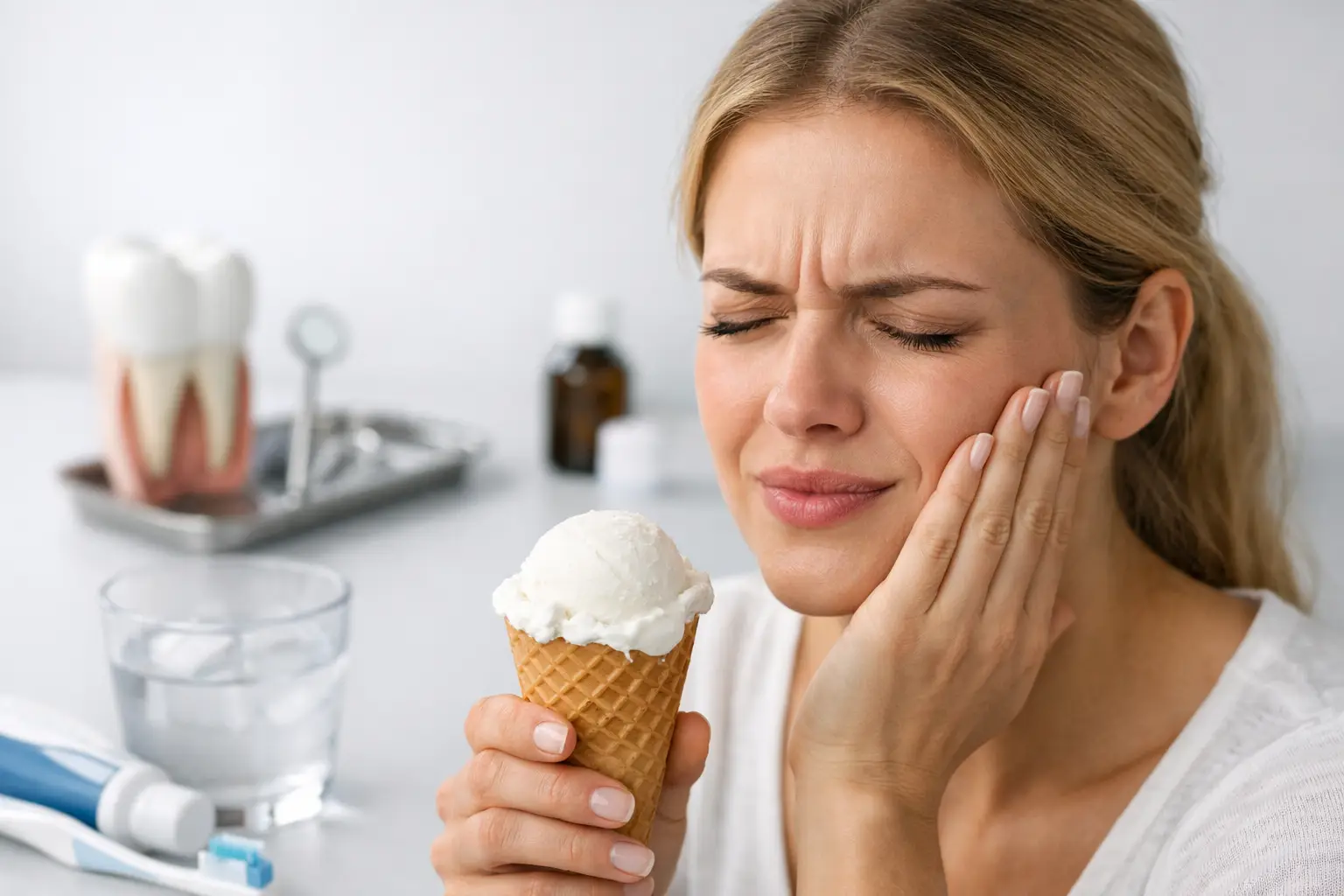
That sharp jolt from cold water, a sweet dessert, or a breath of cool air can make even a healthy-looking smile feel hard to trust. Learning how to stop tooth sensitivity starts with understanding that sensitivity is a symptom, not a diagnosis. Sometimes it improves with a few changes at home. Other times, it is your tooth’s way of signaling a cavity, crack, gum recession, or another issue that needs professional care.
Why teeth become sensitive
Your teeth are protected by enamel above the gumline and cementum around the roots. Beneath those protective layers is dentin, a naturally porous material connected to the nerve inside the tooth. When enamel wears down or gums pull back, hot, cold, sweet, acidic, or even touch-based triggers can travel through dentin and cause a quick, sharp sensation.
A few common causes account for most sensitivity. Brushing too aggressively, using a hard-bristled brush, and abrasive whitening products can gradually wear away protective tooth structure. Frequent acidic drinks, citrus, sports drinks, soda, and reflux can soften enamel as well. Gum disease, natural gum recession, and teeth grinding may expose sensitive root surfaces.
Sensitivity can also come from a single tooth. A cavity, a loose or damaged filling, a cracked tooth, or a failing crown may cause pain that feels similar to ordinary sensitivity. That distinction matters because toothpaste alone cannot repair decay or seal a crack.
How to stop tooth sensitivity at home
When the discomfort is mild, brief, and spread across several teeth, consistent home care is often the right first step. The goal is to reduce irritation and help block the pathways that transmit sensation to the tooth nerve.
Switch to a sensitivity toothpaste
Use a toothpaste made for sensitive teeth twice a day. These formulas generally work by calming nerve response or helping seal exposed dentin. They are not an instant fix. Many people notice improvement after one to two weeks, while fuller results may take several weeks of daily use.
Do not keep switching brands every few days. Choose one sensitivity toothpaste, use it consistently, and spit after brushing rather than rinsing heavily with water. That allows the active ingredients to remain on the teeth longer. If your dentist recommends it, a small amount can sometimes be placed directly on a particularly sensitive area before bed.
Make brushing gentler, not harder
Clean teeth need consistent brushing, but pressure does not equal better cleaning. Choose a soft-bristled toothbrush and use small, gentle circles along the gumline. Hold the brush with just enough pressure to clean, not enough to flatten the bristles.
An electric toothbrush with a pressure sensor can be helpful for people who tend to scrub. Also consider whether your toothpaste is highly abrasive, especially if you use whitening, charcoal, or stain-removing formulas every day. Whitening can be a reasonable cosmetic choice for many patients, but it may temporarily increase sensitivity. It depends on your enamel condition, gum health, and the whitening method used.
Be strategic about acidic foods and drinks
You do not have to eliminate every acidic food, but frequency matters. Sipping soda, lemon water, energy drinks, or sports drinks throughout the day repeatedly exposes enamel to acid. Drinking them with a meal, using a straw for cold beverages, and following with plain water can reduce contact time.
After an acidic drink or meal, wait about 30 minutes before brushing. Enamel is temporarily softened by acid, and immediate brushing can increase wear. Water, sugar-free gum, and saliva give your mouth time to rebalance.
Protect your teeth from grinding
Many people clench or grind without realizing it, particularly during sleep or stressful periods. Signs can include morning jaw soreness, worn or flattened teeth, headaches, and sensitivity that seems worse after waking up. A custom night guard can protect teeth more precisely than a one-size-fits-all option and may help prevent additional enamel wear or cracks.
When sensitivity needs a dental exam
At-home care is useful, but certain patterns deserve an appointment sooner rather than later. Sensitivity that is limited to one tooth, starts suddenly, worsens over time, or lingers after a hot or cold trigger may indicate a problem beyond exposed dentin.
Call a dentist promptly if you have swelling, fever, a bad taste in your mouth, pain when biting, a visible hole or crack, or pain that wakes you from sleep. These symptoms can be associated with infection, advanced decay, or damage that should not be ignored. If facial swelling affects breathing or swallowing, seek emergency medical care immediately.
A dental exam and X-rays can identify whether the source is decay, a leaking filling, gum recession, a fracture, or inflammation inside the tooth. Clear diagnosis prevents the frustrating cycle of trying product after product while the underlying issue progresses.
Professional treatments that can provide lasting relief
The best treatment depends on what is causing the sensitivity. For minor enamel wear or exposed roots, your dentist may recommend a professional fluoride treatment or a protective coating that helps strengthen enamel and reduce sensation. These options can be especially useful when over-the-counter toothpaste has not provided enough relief.
If a filling is worn, chipped, or leaking, replacing it can seal the tooth again. Dental bonding may protect a small exposed area, while a crown may be recommended when a tooth is significantly cracked, weakened, or heavily restored. Gum disease treatment can help stabilize gum health when recession and inflammation are contributing to discomfort.
When sensitivity becomes lingering pain because the nerve inside a tooth is inflamed or infected, root canal treatment may be the most conservative way to relieve pain while preserving the natural tooth. Although it has an intimidating reputation, modern treatment is designed around comfort and effective numbing. The right solution is not always the biggest treatment. It is the one that addresses the actual source of pain and protects your long-term oral health.
Avoid common sensitivity mistakes
Trying to “tough out” persistent pain is one of the biggest mistakes. Teeth do not heal cavities or cracks on their own, and early treatment is typically simpler than waiting until discomfort becomes severe.
Another mistake is using whitening strips, whitening toothpaste, and acidic home remedies while teeth are already sensitive. If whitening is a priority, pause the products and ask your dentist about a plan that protects comfort. Professional guidance can help you improve the appearance of your smile without aggravating exposed dentin or irritated gums.
Finally, do not confuse temporary relief with resolution. Avoiding ice water may prevent a trigger, but it does not explain why the tooth reacts. If sensitivity keeps returning, identifying the cause is more valuable than continually working around it.
A more comfortable next step
Tooth sensitivity can make ordinary meals and drinks feel stressful, but you do not have to guess your way through it. Start with gentle brushing, sensitivity toothpaste, and fewer acid exposures. If the pain is focused, persistent, or getting worse, a professional exam can bring clarity and relief.
At Riverside Cosmetic Dentist, patients can expect a careful evaluation, transparent treatment recommendations, and a comfort-focused approach to restoring healthy function. A timely appointment can turn that next cold drink from something you brace for into something you barely think about.