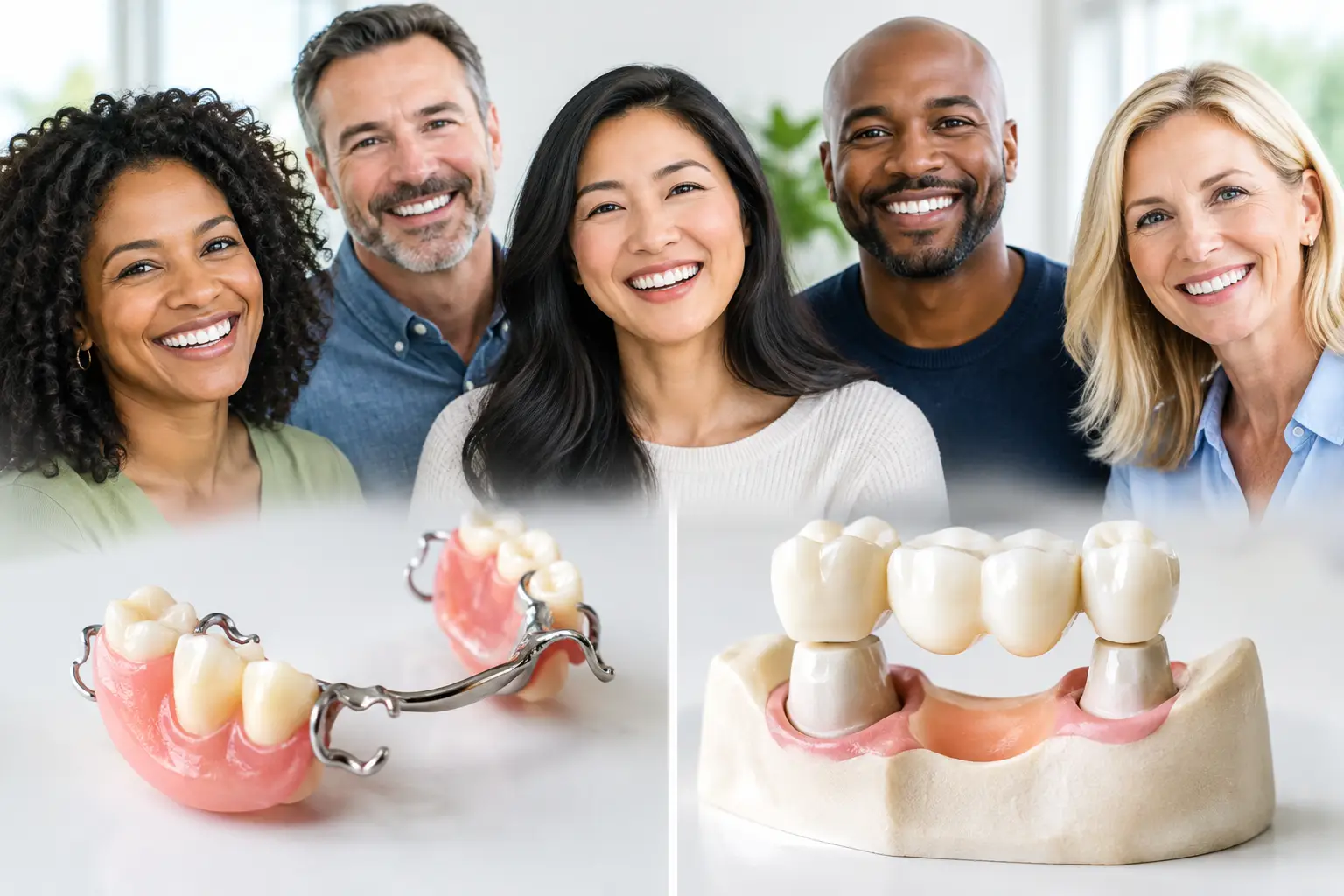
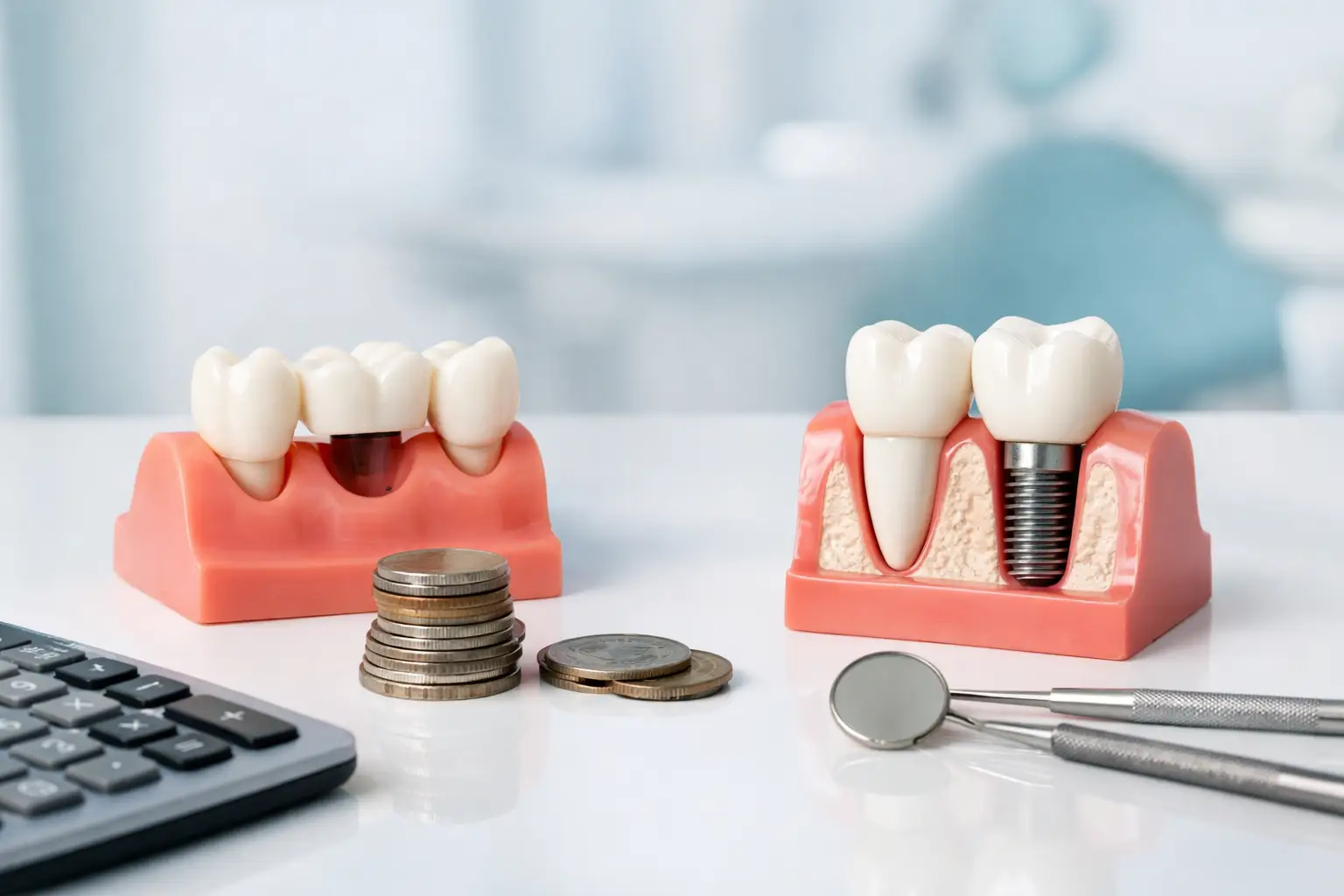
If you are missing a tooth, the first number that usually grabs your attention is the upfront fee. That makes sense. But when patients ask about dental bridge vs implant cost, the better question is often this: what are you really paying for over the next 10 to 20 years?
A bridge often costs less at the start. An implant usually costs more upfront. That does not automatically make one “better” than the other. The right choice depends on your oral health, the condition of the teeth next to the gap, your timeline, your budget, and how long you want the result to last.
Dental bridge vs implant cost at a glance
In many cases, a traditional dental bridge is less expensive at the beginning because it does not involve oral surgery or a titanium post placed in the jaw. A single implant usually has a higher initial fee because it includes the implant post, the abutment, and the crown, and it may also involve imaging, surgery, and follow-up visits.
That said, cost should never be looked at in isolation. A bridge may need replacement sooner than an implant. A bridge also relies on neighboring teeth for support, which can add future dental needs if those teeth weaken or decay. An implant stands independently, which is one reason many patients see it as a long-term investment rather than just a one-time procedure.
What affects the cost of a dental bridge?
A dental bridge replaces a missing tooth by anchoring a false tooth to the teeth on either side of the space. The total cost depends on the type of bridge, the materials used, and the condition of the supporting teeth.
If the adjacent teeth already need crowns because they are cracked, heavily filled, or structurally weak, a bridge may make practical and financial sense. You are restoring those teeth anyway, so combining treatment can be efficient. On the other hand, if the neighboring teeth are healthy and untouched, preparing them for crowns may feel like too high a price biologically, even if the dollar amount looks lower at first.
Fees also vary depending on whether you need exams, X-rays, digital scans, temporary restorations, or additional treatment before the final bridge is placed. If gum disease or decay is present, those problems need to be addressed first.
When a bridge may be the more practical option
A bridge can be a strong option if you want a faster solution, want to avoid surgery, or are not a good candidate for an implant because of health factors, bone loss, or personal preference. Bridges are also sometimes easier to fit into a tighter short-term budget.
For some patients, speed matters. If you have a visible missing tooth and want to restore your smile sooner, a bridge may offer a more direct path with fewer stages than implant treatment.
What affects the cost of a dental implant?
A dental implant replaces the root of the missing tooth as well as the visible crown. That root replacement is a big part of why the fee is higher. It is also part of why implants often feel more secure and help support bone in the area.
The final price of an implant depends on several factors, including whether you need a tooth extraction, bone grafting, sinus work in upper back areas, sedation, or a healing period before the crown can be attached. Some cases are straightforward. Others require more planning and more appointments.
Material choice matters too. So does technology. Practices that use advanced imaging and detailed treatment planning may not be the cheapest option on paper, but that precision can improve fit, comfort, and long-term outcomes.
Why implant costs can vary so much
One patient may only need a single implant and crown. Another may need extraction, bone grafting, and a few months of healing before the implant is restored. Those are very different cases, so comparing prices without comparing treatment details can be misleading.
This is where a clear exam matters. A personalized treatment plan gives you a real cost, not a guess based on internet averages.
Upfront price vs long-term value
This is where the dental bridge vs implant cost conversation becomes more useful. A bridge can cost less now but may need replacement earlier. An implant costs more now but often lasts longer with good care.
Bridges commonly last many years, but they are under constant stress and depend on other teeth. If one supporting tooth develops a problem, the whole bridge can be affected. Implants are not invincible, but they do not place that same burden on neighboring teeth.
There is also the bone issue. When a tooth is lost, the jawbone in that area can shrink over time. An implant helps stimulate the bone because it replaces the root. A bridge does not do that. For some patients, preserving bone and gum contours matters not just for health, but for appearance too.
So the cheaper option today can end up costing more later if it needs replacement or leads to additional treatment nearby. That does not mean implants are always the smarter financial decision. It means the timeline matters.
Insurance and financing change the picture
Dental insurance may cover part of a bridge, part of an implant, or just the crown portion, depending on your plan. Some plans still treat implants as a major service with lower coverage. Others are becoming more implant-friendly than they used to be.
That is why estimates should be based on your actual benefits, not generic assumptions. Flexible financing can also make an implant more manageable, even if the sticker price is higher. Many patients choose treatment based on monthly affordability, not just total fee.
If cost has been the reason you have delayed replacing a missing tooth, it is worth asking for a complete breakdown. Transparent treatment planning often reveals more options than patients expect.
Which option is better for your specific situation?
If the teeth on either side of the missing tooth are healthy, an implant often preserves more natural tooth structure because those neighboring teeth do not need to be filed down. If those teeth already need crowns, a bridge may be more sensible.
If you have reduced bone volume, an implant may still be possible, but the cost and treatment time can increase. If you have medical conditions that affect healing, a bridge may be the safer route. If you want the option that most closely mimics a natural tooth root, an implant has a clear advantage.
Appearance matters too. Both can look very natural when done well. In highly visible areas, the quality of the planning, materials, and final shaping often matters as much as the category of treatment.
Dental bridge vs implant cost in real life
Most people do not make this decision in a vacuum. They are balancing work schedules, family expenses, dental anxiety, insurance limits, and the simple desire to stop thinking about a missing tooth.
That is why the best conversations are practical. How soon do you want it fixed? Are you comfortable with surgery? Are the neighboring teeth healthy? Do you want the lowest upfront cost, or are you trying to minimize repeat treatment later? There is no universal answer, only the right fit for your mouth and your priorities.
For patients who want a local team that can evaluate bridges, implants, cosmetic concerns, and overall oral health in one place, Riverside Cosmetic Dentist offers comprehensive care with a strong focus on comfort, clarity, and personalized treatment planning. You can learn more about the practice, the Riverside office, and Dr. Ali Shmara through the Riverside Cosmetic Dentist website, the Riverside page, and the dentist page.
A smart way to compare costs before you decide
Ask for more than a price. Ask what is included, how long the treatment is expected to last, what maintenance is involved, and what happens if something fails. A lower estimate is not always the better value if it leaves out necessary steps or leads to more dentistry later.
You should also ask how your bite, gum health, and long-term goals affect the recommendation. Good treatment planning is not about pushing the most expensive option. It is about matching the solution to the patient.
If you have been putting off treatment because the decision feels confusing, that is normal. The most helpful next step is a thorough exam with straightforward answers. Once you understand the real differences in cost, timing, and longevity, the choice tends to feel much more manageable.
Replacing a missing tooth is not just about filling a space. It is about protecting your comfort, your confidence, and the health of the rest of your smile for years to come.