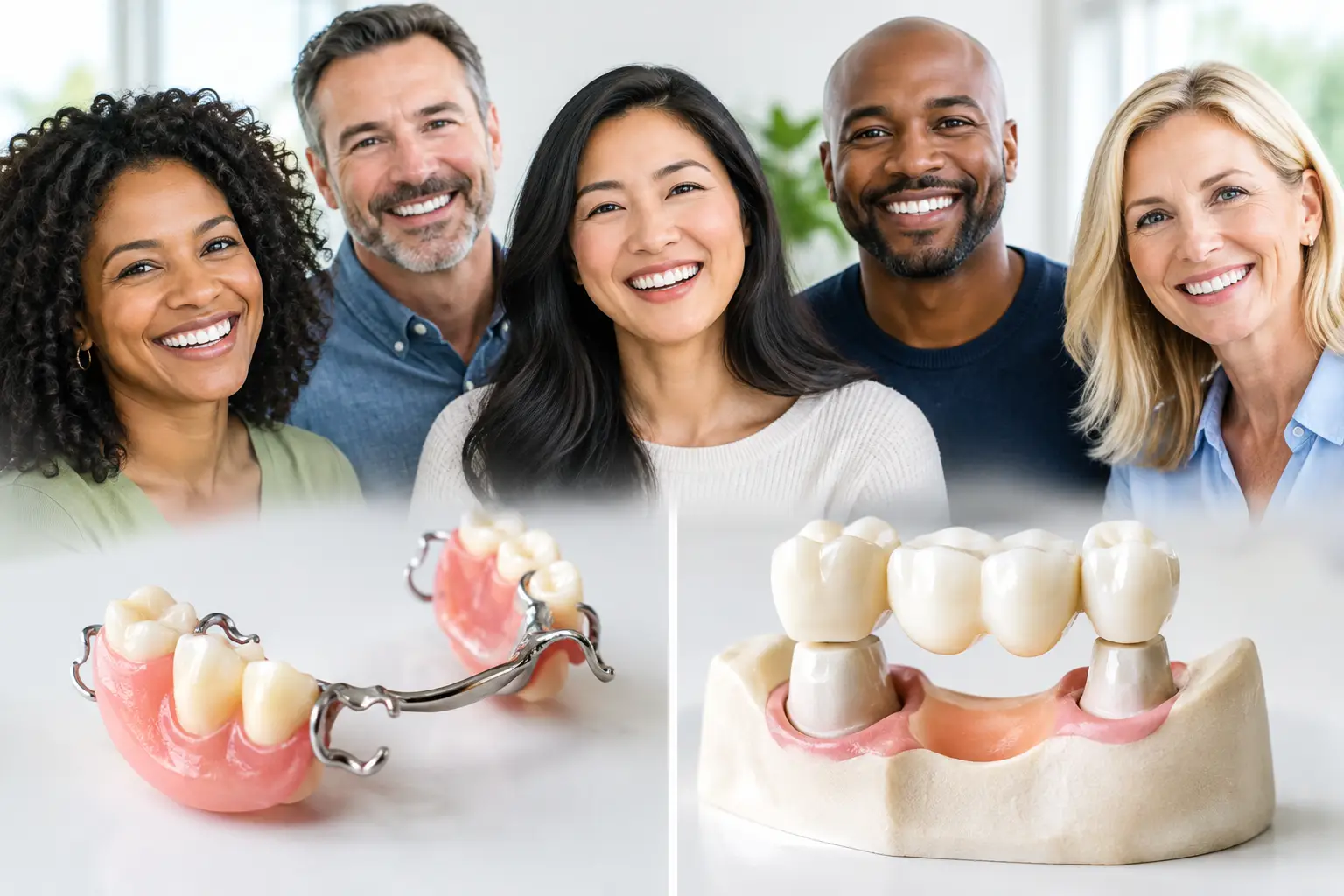
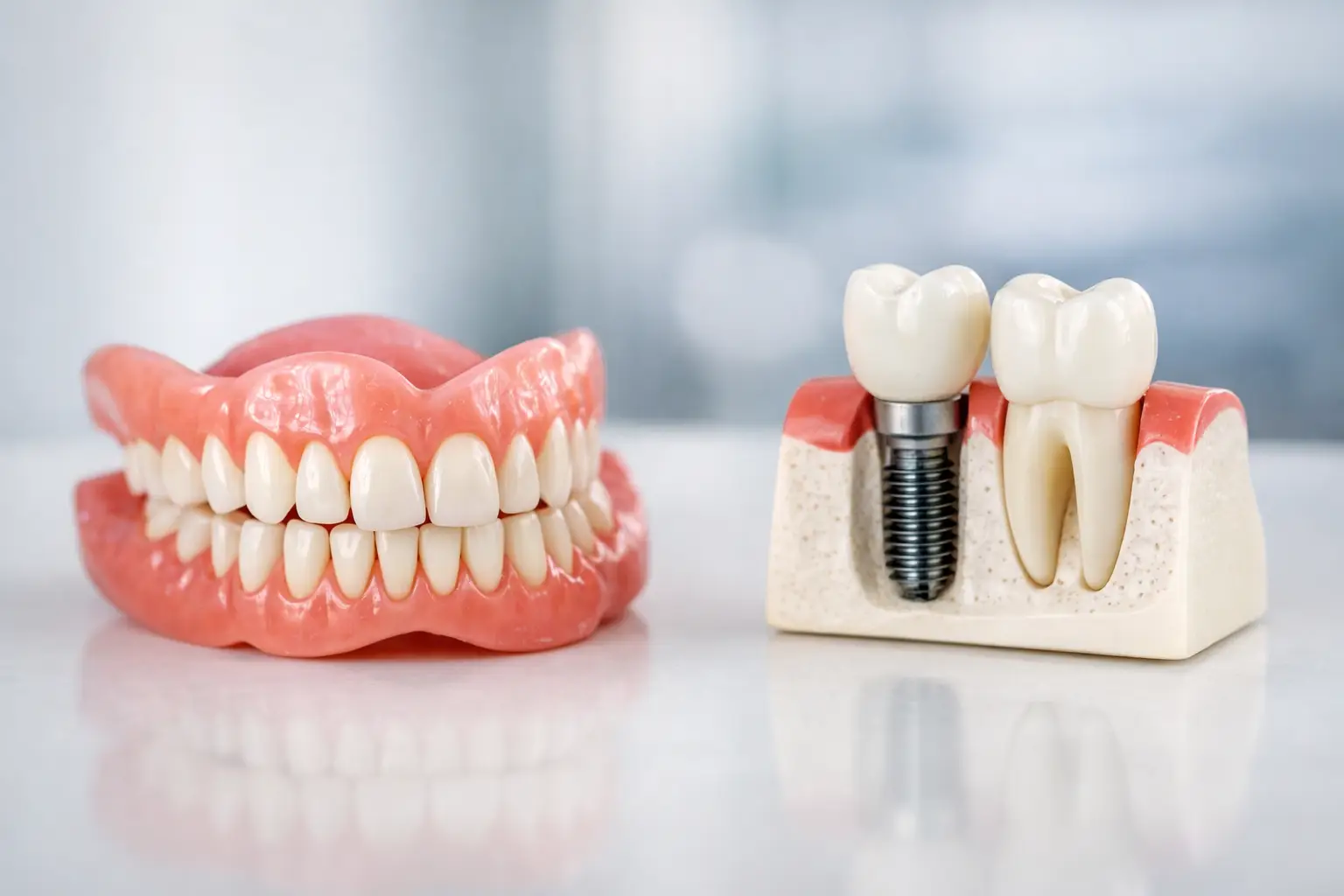
If you are asking are dentures better than implants, you are probably not looking for a textbook answer. You want to know what will feel comfortable, look natural, fit your budget, and let you eat and speak without thinking about your teeth all day. That is the real decision.
The honest answer is that dentures are not automatically better than implants, and implants are not automatically better than dentures. The right choice depends on your oral health, how many teeth are missing, your bone support, your budget, and how important long-term stability is to you. For some patients, dentures are the most practical solution. For others, implants are the closer match to natural teeth.
Are dentures better than implants for everyday life?
For day-to-day function, implants usually win. They are anchored into the jaw, so they do not shift the way removable dentures can. That matters when you are chewing steak, biting into an apple, or talking in a meeting without worrying that your teeth might move.
Dentures can still work very well, especially when they are made carefully and adjusted properly. They restore appearance, improve speech, and help many patients return to normal activities. But they do have limits. Lower dentures in particular tend to be less stable than upper dentures, and some people find that adhesives, sore spots, or slipping become frustrating over time.
If your main goal is security and a more natural feel, implants tend to provide a stronger result. If your priority is replacing teeth quickly at a lower upfront cost, dentures often make more sense.
Cost matters, and it changes the conversation
For many patients, this is where the decision becomes real. Dentures usually cost less upfront than implants. If you need to replace a full arch of teeth, traditional dentures can be a much more affordable starting point than placing multiple implants.
That lower initial price is one reason dentures remain a common treatment. They can restore your smile without the surgical process and higher investment that implants often require. For patients who need tooth replacement soon and need to keep treatment financially manageable, dentures may be the better fit.
Implants cost more because they involve surgery, healing time, and often additional planning or procedures such as bone grafting. But lower upfront cost does not always mean lower long-term cost. Dentures may need relines, adjustments, repairs, or replacement over the years. Implants generally require a bigger investment at the start, but they often offer greater durability and function.
That is why a good treatment discussion should include both the immediate cost and the likely long-term maintenance.
Comfort and confidence are not the same thing
Some patients assume dentures will feel normal right away. Usually, that is not how it goes. There is an adjustment period. Your mouth has to adapt to the appliance, and your dentist may need to make refinements so sore areas and pressure points are relieved.
Many people do adapt well. They learn how to chew differently, speak more comfortably, and wear their dentures with confidence. But others never fully like the removable feeling.
Implants are different because they are fixed in place. Once healed and restored, they tend to feel more like your own teeth. That can make a major difference emotionally. Patients often describe implants as giving them confidence they did not realize they had lost.
This is especially important if you avoid certain foods, cover your mouth when you laugh, or feel self-conscious in social settings. In those cases, the decision is not only about replacing teeth. It is about restoring ease in everyday life.
Are dentures better than implants if you have bone loss?
Sometimes yes, and sometimes no. Bone loss is one of the biggest factors in treatment planning.
Dentures do not require the same bone support that implants do, which can make them more accessible for patients who have been missing teeth for a long time. If the jawbone has shrunk significantly, traditional dentures may still be possible even when implant placement is more complicated.
However, implants have one important long-term advantage. They help stimulate the jawbone, which can reduce further bone loss. Dentures do not do that. In fact, over time, wearing dentures without tooth roots in the bone can allow the ridge to continue shrinking, which can affect fit and facial support.
That is why patients with bone loss are not always steered away from implants. Sometimes they are candidates for bone grafting or for implant-supported options that use available bone strategically. A full exam, X-rays, and a personalized consultation are the only way to know what is realistic.
Appearance depends on planning, not just the treatment type
Both dentures and implants can look attractive. Poorly made dentures can look artificial, but well-crafted dentures can provide excellent cosmetic improvement. The same is true with implants. A dental implant is only as natural-looking as the crown, bridge, or denture attached to it.
The best esthetic outcomes come from careful planning of tooth shape, shade, gum support, and facial proportions. This matters even more for front teeth, where small details are easy to notice.
Patients are often surprised to learn that the question is not simply which option looks better on paper. It is which option is designed well for their face, smile line, and oral condition. That is where an experienced restorative and cosmetic dentist can make a visible difference.
A middle-ground option many patients overlook
The choice is not always between traditional dentures and a full set of individual implants. Implant-supported dentures are often the middle path.
These dentures attach to implants for better stability than traditional removable dentures. Depending on the design, they may snap in and out for cleaning or be fixed more securely in place. For patients who want more confidence but are not ready for the cost of replacing every tooth with an individual implant, this option can be a smart compromise.
It can improve chewing, reduce slipping, and provide a more secure fit without requiring the same level of treatment as full-mouth implant reconstruction. For many adults, that balance of performance and cost makes the most sense.
When dentures may be the better option
Dentures may be the better choice if you need a faster or more affordable solution, if you are not a strong candidate for implant surgery, or if you prefer a non-surgical approach. They can also be a practical temporary step while planning future treatment.
This is especially true for patients managing multiple dental issues at once. If extractions, gum treatment, or other restorative work are part of the picture, dentures may help restore function sooner while larger plans are discussed.
There is nothing second-rate about choosing dentures when they fit your health needs and financial reality. Good dentistry is not about pushing the most complex treatment. It is about recommending what is appropriate, predictable, and manageable for the person sitting in the chair.
When implants may be the better option
Implants may be the better choice if you want the closest thing to natural teeth in feel and function, if you value long-term stability, and if your bone and overall health support the procedure. They are often ideal for patients who are tired of loose appliances or who want to preserve jawbone support over time.
They can also be especially useful when replacing one or a few missing teeth, since an implant can stand on its own without relying on neighboring teeth the way some other restorations do.
For many patients, implants are less about luxury and more about quality of life. Eating comfortably, speaking clearly, and not worrying about movement can be worth the investment.
The best answer starts with your mouth, not the internet
Online research can help you understand the options, but it cannot tell you whether your gums are healthy, whether your bone is strong enough, or whether a denture or implant-supported plan would serve you better. That takes a proper exam and a clear conversation about your goals.
At Riverside Cosmetic Dentist, treatment planning is centered on comfort, transparency, and practical results. Some patients come in convinced they need implants and learn that dentures are the smarter choice. Others assume dentures are their only option and find out they are candidates for something more stable.
The most helpful question is not just are dentures better than implants. It is which solution will let you eat, smile, and live more comfortably with the least compromise for your situation. That answer is personal, and when it is planned well, it can change far more than your smile.