
Do I Need a Dental Bridge in Riverside, CA?
Missing a tooth can affect chewing, speech, and confidence. If you live in Riverside, California, you may be weighing options for replacing a tooth. Our team at Riverside Cosmetic Dentist, led by Dr. Ali Shmara, D.M.D., is here to help explain how a Riverside Dental Bridge works and how we tailor treatment to your mouth and goals.
What a dental bridge does
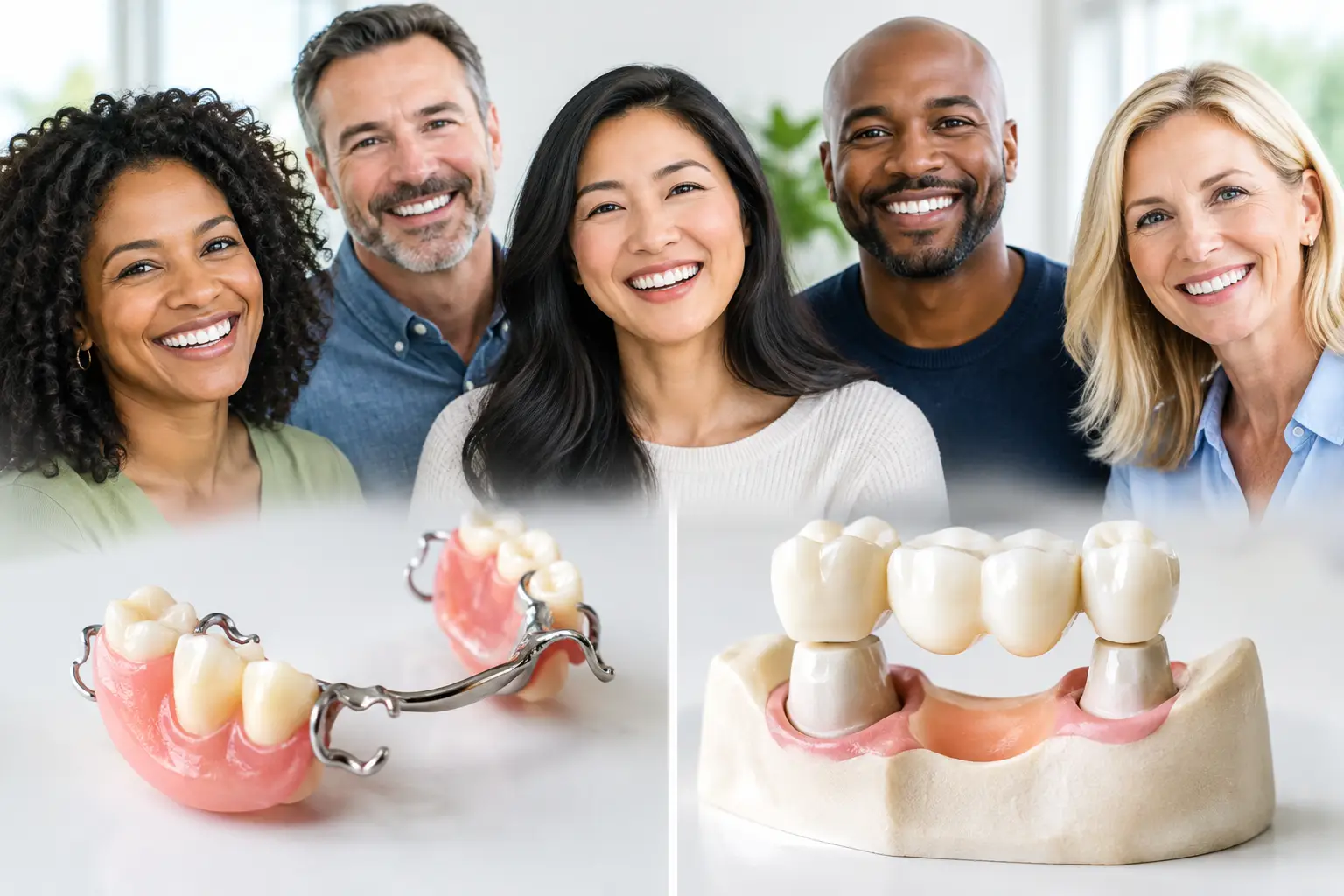
A dental bridge is a fixed restoration that replaces one or more missing teeth by anchoring artificial teeth to adjacent teeth or implants. Types include traditional tooth-borne bridges, cantilever bridges, resin-bonded (Maryland) bridges, and implant-supported bridges. These concepts are described in ADA MouthHealthy materials on bridges and their indications. (American Dental Association, n.d.)
In practice, a bridge helps restore chewing efficiency, supports speech, prevents drifting of neighboring teeth, and maintains bite and facial aesthetics. These are common indications you’ll see discussed in ADA patient resources and restorative dentistry guidelines. (American Dental Association, n.d.)
Indications and considerations
- Replacing a missing tooth to restore chewing/eating efficiency and speech
- Preventing adjacent teeth from drifting into the gap
- Maintaining bite alignment and facial aesthetics
- Choosing a durable, long-lasting option when surrounding teeth can support a bridge
Deciding to proceed with a bridge involves several patient-specific factors. If your adjacent teeth are healthy enough to serve as anchors, a traditional tooth-borne bridge may be a solid choice. If the neighboring teeth are compromised or if you prefer to avoid modifying them, an implant-supported option could be considered. These distinctions are outlined in ADA materials and restorative dentistry resources. (American Dental Association, n.d.)
Alternatives to bridges
- Implant-supported crowns/bridges: A common alternative that avoids altering adjacent teeth and mirrors natural tooth function and appearance. ADA and restorative dentistry sources discuss implants as a durable option with different long-term considerations compared with tooth-supported bridges. (American Dental Association, n.d.)
- Removable partial dentures: A fixed bridge isn’t always feasible due to anatomy or patient preference; removable partial dentures are a widely used option in prosthodontic planning. (Restorative Dentistry Foundation materials, cited in Restorativedentistry.org resources)
When considering these options, many Riverside clinicians describe implants and partial dentures as viable paths in appropriate cases. Our team discusses these choices with patients to tailor a plan that fits your bite, bone health, and lifestyle. (ADA materials for indirect restorations; restorative dentistry sources)
Materials and planning considerations
Indirect restorations, including some types of bridges, involve material selection—ceramics, metals, or ceramic-ceramic hybrids—and are often designed using CAD/CAM workflows. Biocompatibility, esthetics, and durability guide these choices, as discussed by the ADA and other professional organizations. (American Dental Association, n.d.)
From a Riverside perspective, material choices may influence the look and feel of your bridge, with guidance focused on balancing aesthetics and function while respecting gum tissue health and bite support. Local practice pages describe how these decisions play out in routine care and planning. (American Dental Association; Restorativedentistry.org references)
What to consider if you’re evaluating a bridge in Riverside
When you’re weighing bridges versus implants or other options, the decision comes down to a clinical evaluation of bite anatomy, the health and strength of supporting teeth, bone density, gum health, and your cosmetic goals. A Riverside dentist typically reviews X-rays or 3D imaging to assess bone support for implants or the need to reduce adjacent teeth for a traditional bridge. ADA patient materials and implant-focused discussions provide a framework for understanding these choices. (American Dental Association; NIDCR; CDC sources)
As you explore options, you’ll want clear explanations of what each approach entails, including the potential need for preparatory work on healthy teeth, the longevity and maintenance of the chosen restoration, and the financial considerations. Our practice centers on transparent conversations so you can make informed decisions aligned with your health and finances. (ADA MouthHealthy; NIDCR; CDC references)
Is a Riverside Dental Bridge the right path for you?
For a single missing tooth, a traditional fixed bridge often provides a reliable, long-standing solution. An implant-supported bridge may be preferable if you’re seeking to preserve adjacent teeth and avoid altering them, provided you have adequate bone and budget for the implant process. In Riverside, these options are commonly discussed alongside bonded (Maryland) bridges and removable partial dentures, depending on your mouth’s anatomy and your preferences. (ADA resources; restorative dentistry guidance)
To learn which option best fits your situation, you should begin with a professional evaluation. Your dentist will assess bite forces, alignment, and the health of the gums and supporting bone, and will discuss material choices and expected outcomes. (ADA materials for indirect restorations; ADA MouthHealthy resources)
A practical view for Riverside readers
Replacing a missing tooth is a common part of maintaining long-term oral health. Nationwide data show that tooth loss remains an issue for many adults, particularly as demographics shift and access to care varies. These trends help explain why many patients in Riverside seek reliable, evidence-based options for replacement. (NIDCR; CDC; ADA sources)
Our goal is to give you a clear sense of what to expect and how we tailor treatment to your mouth, your smile, and your life in Riverside. We aim to demystify the process so you feel confident choosing a path that preserves function and aesthetics for years to come. (ADA and CDC/NIDCR background sources)
Next steps and how to reach us
If you’re considering a dental bridge, contact Riverside Cosmetic Dentist to schedule a consult. For the current phone number and office address, please visit our Contact page. Contact page.
Key takeaways
- A dental bridge is a fixed restoration that replaces missing teeth by anchoring artificial teeth to adjacent teeth or implants, with several design options (traditional, cantilever, Maryland, implant-supported). (ADA MouthHealthy)
- Common indications include restoring chewing, speech, preventing tooth movement, and preserving bite and aesthetics. (ADA MouthHealthy)
- Alternatives include implant-supported restorations and removable partial dentures, depending on bone health, anatomy, and patient preference. (ADA and restorative dentistry sources)
- Material choices for indirect restorations involve ceramics and metals, often using CAD/CAM workflows, with biocompatibility and aesthetics guiding decisions. (ADA)
- Local Riverside care pathways reflect typical decision-making between bridges, implants, and bonded options, always guided by clinical evaluation of bite, bone, and gum health. (Riverside practice perspectives; ADA/NIDCR/CDC guidance)
References
American Dental Association. (n.d.). Bridges. MouthHealthy: Dental Bridges. Retrieved from MouthHealthy: Dental Bridges.
American Dental Association. (n.d.). Dental Bridges: Types & Who Needs Them. Cleveland Clinic. Retrieved from Cleveland Clinic.
American Dental Association. (n.d.). Materials for Indirect Restorations. ADA. Retrieved from Materials for Indirect Restorations.
Riverside Dental Group. (n.d.). Dental Bridges. Riverside Dental Group. Retrieved from Dental Bridges.
National Institute of Dental and Craniofacial Research. (2024). Tooth Loss in Adults (Ages 20 to 64). Retrieved from Tooth Loss in Adults (Ages 20 to 64).
Centers for Disease Control and Prevention. (2024). 2024 Oral Health Surveillance: Selected Findings. Retrieved from 2024 Oral Health Surveillance: Selected Findings.
American College of Prosthodontists. (2024). Private practice of prosthodontists in the United States: Results from the 2024 survey of prosthodontists and trends since 2008. Retrieved from Private practice of prosthodontists in the United States.