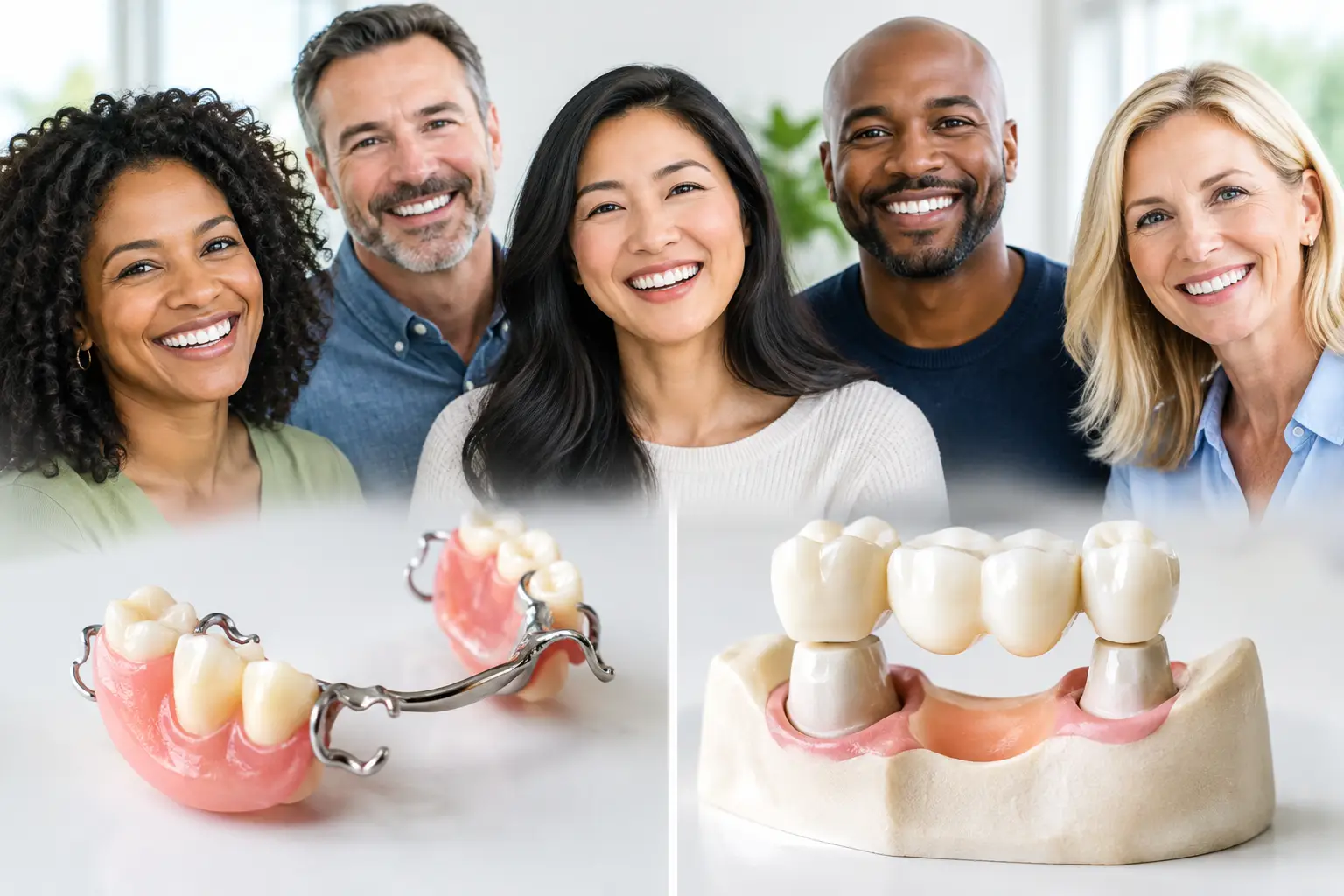

When several teeth are missing, everyday routines can change quickly. Chewing may become uncomfortable, speech may feel less clear, and smiling in photos can become something you avoid. This guide to replacing multiple teeth explains the options your dentist may recommend, what makes each one different, and how to choose a treatment plan that supports both your health and confidence.
Missing teeth are not only a cosmetic concern. The teeth around an open space can gradually shift, the jawbone may lose stimulation, and your bite can change over time. Replacing teeth promptly and thoughtfully can help protect the rest of your smile.
Start With a Complete Dental Evaluation
There is no one replacement method that works best for every patient. A good plan begins with an exam, digital X-rays, and a conversation about what you want to improve. Your dentist will look at the number and location of missing teeth, the condition of your gums, available bone, bite alignment, oral health history, and budget.
If teeth were lost because of gum disease, decay, or an injury, those underlying issues need attention as well. Placing a restoration without stabilizing gum health or treating active infection can compromise the long-term result.
At Riverside Cosmetic Dentist, Dr. Ali Shmara approaches treatment planning with this full-picture mindset. The goal is not simply to fill spaces. It is to create a replacement plan that feels comfortable, looks natural, and works reliably when you eat and speak.
Your Guide to Replacing Multiple Teeth: Main Options
The best option depends on your oral health, how many teeth are missing, and whether you prefer a fixed or removable solution. Many patients choose one of the following approaches.
Implant-Supported Bridges
Dental implants are small posts placed in the jawbone to replace tooth roots. When multiple teeth are missing in the same area, two or more implants can often support a bridge. This avoids the need to place one implant for every missing tooth while still providing a fixed restoration.
An implant-supported bridge is designed to stay in place. It can feel closer to natural teeth than a removable appliance, and it provides the jawbone with the stimulation it needs to remain healthier. Because the bridge is supported by implants rather than neighboring natural teeth, healthy adjacent teeth usually do not need to be reshaped.
The trade-off is time and cost. Implant treatment may involve healing time after placement, and some patients need bone grafting before implants can be placed. For qualified patients, however, implants can be an excellent long-term investment in comfort, function, and appearance.
Traditional Dental Bridges
A traditional bridge replaces one or more missing teeth by attaching a custom restoration to crowns on the teeth beside the gap. It is fixed in place and can restore a complete-looking smile without surgery.
This option may make sense when the supporting teeth already need crowns due to significant wear, large fillings, or damage. Treatment is generally completed more quickly than implants, and a bridge can be a practical choice for patients who are not candidates for implant surgery.
The consideration is that the teeth supporting the bridge must be prepared for crowns, even if they are otherwise healthy. Bridges also do not replace tooth roots, so they do not prevent bone loss beneath the missing teeth. Careful brushing under the bridge and regular professional cleanings are essential.
Partial Dentures
A partial denture is a removable appliance that replaces several missing teeth. It may use a gum-colored or metal framework and clasps that rest around remaining teeth. Modern partial dentures can be made to blend naturally with your smile and may be a cost-conscious way to restore function.
Partial dentures are particularly useful when missing teeth are located in different areas of the mouth or when there are not enough healthy teeth or sufficient bone for a bridge or implants. They can also serve as a temporary solution while you prepare for more extensive treatment.
Because a partial denture is removable, it requires daily cleaning and an adjustment period. Some patients notice slight movement at first, and it may need periodic adjustments as the mouth changes. A well-designed partial should fit securely and help you return to eating a wider range of foods.
Full Dentures and Implant-Retained Dentures
When most or all teeth in an upper or lower arch are missing, a full denture may be recommended. Conventional dentures rest on the gums and are removable for cleaning. They can restore facial support, improve appearance, and make it easier to eat compared with having no teeth.
For patients who want greater stability, implants can retain a denture. An implant-retained denture still comes out for cleaning in many cases, but it attaches more securely than a conventional denture. This can reduce slipping, improve biting confidence, and make speech feel more natural.
A fixed full-arch implant restoration is another option for some patients. It is attached to implants and can only be removed by a dental professional. This treatment can offer a very stable, tooth-like result, though it requires sufficient bone, detailed planning, and a larger financial commitment.
How to Choose the Right Tooth Replacement Plan
Start by thinking about your priorities. If you want the closest feel to natural teeth and are comfortable with a longer treatment process, implant-supported options may be worth considering. If you need a fixed replacement sooner and have strong neighboring teeth that need crowns, a traditional bridge may be appropriate. If affordability, flexibility, or widespread tooth loss is the main concern, a partial or full denture can provide meaningful improvement.
Your health also matters. Conditions such as uncontrolled diabetes, active gum disease, heavy tobacco use, or certain medications can affect healing and implant eligibility. That does not automatically rule out implants, but it makes personalized evaluation especially important.
Be direct about your budget and timeline. A transparent dental office should explain the recommended sequence of care, alternatives, expected maintenance, insurance considerations, and financing options before treatment begins. You should never feel pressured to choose a solution you do not understand.
What the Treatment Process Can Look Like
The path to replacing multiple teeth varies, but it usually begins with planning. Your dentist may take X-rays or 3D images, impressions or digital scans, and photographs to evaluate your bite and design a natural-looking result.
If extractions, gum treatment, or bone grafting are needed, those steps may come first. For implant cases, a temporary restoration may be available while the implants heal. Once the foundation is ready, the final bridge, denture, or implant restoration is made to fit your mouth and blend with your existing teeth.
Follow-up visits are part of protecting your investment. Even replacement teeth need professional care. Your dentist will check the fit, bite, gums, implant health, and surrounding teeth during regular visits.
Caring for Replacement Teeth
Daily care depends on the type of restoration, but the basics remain consistent: brush twice a day, clean between teeth or around implants as instructed, and keep regular cleanings. A bridge may require a floss threader or water flosser to clean underneath it. Removable dentures should be cleaned daily and stored properly when out of the mouth. Implant restorations need careful plaque removal to protect the gums and bone around them.
Avoid using replacement teeth to open packaging, bite ice, or chew hard objects. If a denture becomes loose, a bridge feels high when biting, or you notice bleeding, swelling, pain, or a change around an implant, schedule an evaluation rather than trying to adjust it yourself.
A Comfortable Next Step in Riverside
Replacing several teeth can sound overwhelming, especially if you have delayed care because of anxiety, cost concerns, or a past difficult experience. The right dental team will break the process into manageable steps and explain why each recommendation fits your needs.
Patients looking for comprehensive care can learn more about Riverside Cosmetic Dentist, the Riverside, California office, and dentist Dr. Ali Shmara before scheduling. A thoughtful consultation can turn a complicated dental problem into a clear plan for eating comfortably, smiling freely, and protecting your oral health for years to come.