A broken tooth can happen in one quick moment – biting a hard popcorn kernel, taking a fall, or discovering that an old filling has weakened the tooth around it. This broken tooth repair example shows why the right treatment is not based only on how the tooth looks. Your dentist also needs to determine how deep the damage goes, whether the nerve is affected, and whether the remaining tooth can reliably support a restoration.
For many patients, the first concern is simple: “Can this tooth be saved?” In many cases, yes. Modern restorative dentistry can repair small chips, rebuild major fractures, and replace a tooth when saving it is no longer the healthiest option. Acting promptly gives your dentist more choices and can prevent a manageable problem from becoming a painful emergency.
A Broken Tooth Repair Example: From Fracture to Crown
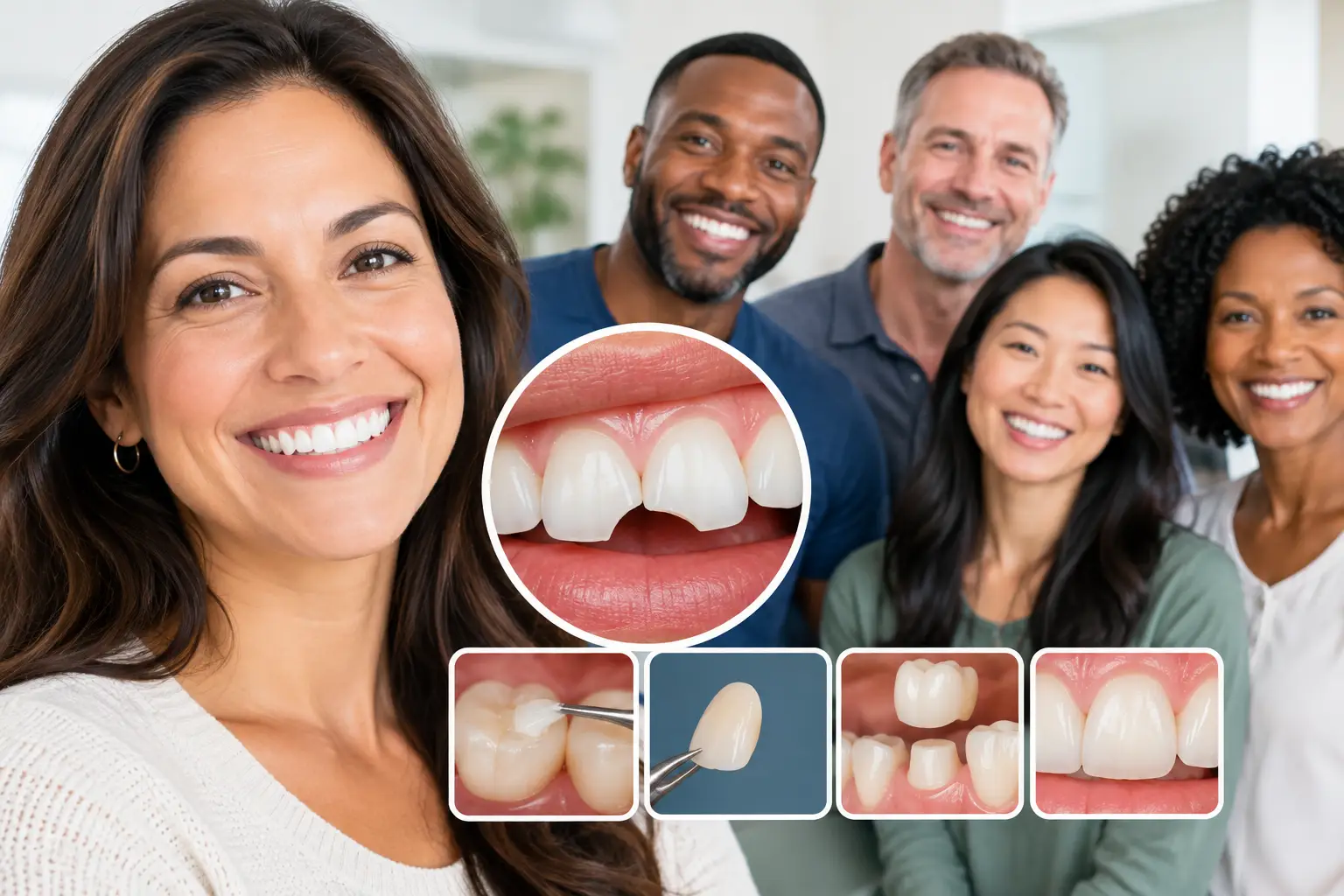
Imagine a patient who bites down on a hard piece of candy and feels a sharp crack in a back molar. A corner of the tooth breaks away, leaving a rough edge and sensitivity when chewing. There is no severe pain at first, but cold drinks cause a quick ache.
At the appointment, the dentist examines the tooth and takes an X-ray to look below the gumline and around the root. The fracture has removed a large portion of the chewing surface, but the root is stable and the dental pulp – the tissue containing the tooth’s nerve – is not infected. Because too much tooth structure is missing for a simple filling to hold up under chewing pressure, the recommended repair is a dental crown.
The damaged area is cleaned, the remaining tooth is shaped to support the crown, and a natural-looking restoration is designed to cover and protect it. Once placed, the crown restores the tooth’s shape, bite, and strength. The patient can chew comfortably again without constantly worrying that another piece will break.
This is a common broken tooth repair example, but it is not the answer for every fracture. A small front-tooth chip may only need bonding. A deeper break that reaches the nerve may require root canal treatment before a crown. If the fracture extends far below the gumline or splits the root, extraction and replacement may be the more predictable choice.
How Dentists Choose the Right Repair
The visible piece of a broken tooth tells only part of the story. Two teeth can look similarly chipped yet require very different treatment. A careful exam helps determine whether the damage is limited to enamel, extends into dentin, reaches the pulp, or travels into the root.
The location matters, too. Front teeth are judged heavily on appearance, so shade matching and contour are especially important. Back teeth absorb much stronger chewing forces, which means a repair must be built for durability as well as appearance. A restoration that looks fine but cannot withstand your bite is not a lasting solution.
Your dentist will also consider whether there is decay, a large existing filling, gum inflammation, or signs of clenching and grinding. If grinding contributed to the break, a nightguard may be recommended after treatment to protect the repaired tooth and the surrounding teeth.
Small Chips Often Respond Well to Bonding
Dental bonding is often appropriate when only a small section of enamel has chipped away, particularly on a front tooth. The dentist applies tooth-colored composite resin, sculpts it into the missing area, and polishes it to blend with the natural tooth.
Bonding is conservative and can often be completed in one visit. It is also typically less costly than a veneer or crown. The trade-off is that composite can stain, chip, or wear more easily over time, especially on teeth exposed to heavy biting pressure. It may be an excellent repair for a minor chip, but it is usually not the best choice for a severely fractured molar.
Larger Breaks May Need a Crown or Onlay
When a tooth has lost substantial structure, a crown is often the strongest option. It covers the visible portion of the tooth and helps distribute chewing forces more evenly. Crowns can be made to match the color and character of neighboring teeth, which is valuable when restoring a visible tooth.
In some situations, an onlay may be recommended instead. An onlay rebuilds the damaged chewing surface while preserving more healthy tooth structure than a full crown. Whether an onlay or crown is appropriate depends on the fracture pattern, the amount of stable enamel left, and the forces placed on that tooth.
Root Canal Treatment Can Save a Deeply Damaged Tooth
A broken tooth may expose or inflame the pulp. Warning signs include lingering sensitivity to heat or cold, spontaneous throbbing pain, swelling, or pain when biting. If the nerve has been irreversibly damaged or infected, root canal treatment removes the affected tissue, cleans the inside of the tooth, and seals it.
After a root canal, a crown is often placed on a back tooth because the tooth may be more vulnerable to future fracture. Although patients are often anxious about root canals, modern anesthetic techniques and careful treatment can make the appointment far more comfortable than the infection or toothache itself.
When Extraction Is the Healthiest Choice
Dentists aim to preserve natural teeth whenever it is predictable and healthy to do so. Still, some fractures cannot be restored safely. A vertical root fracture, a crack extending too far below the gumline, or a tooth weakened by extensive decay may not have enough sound structure left to support a restoration.
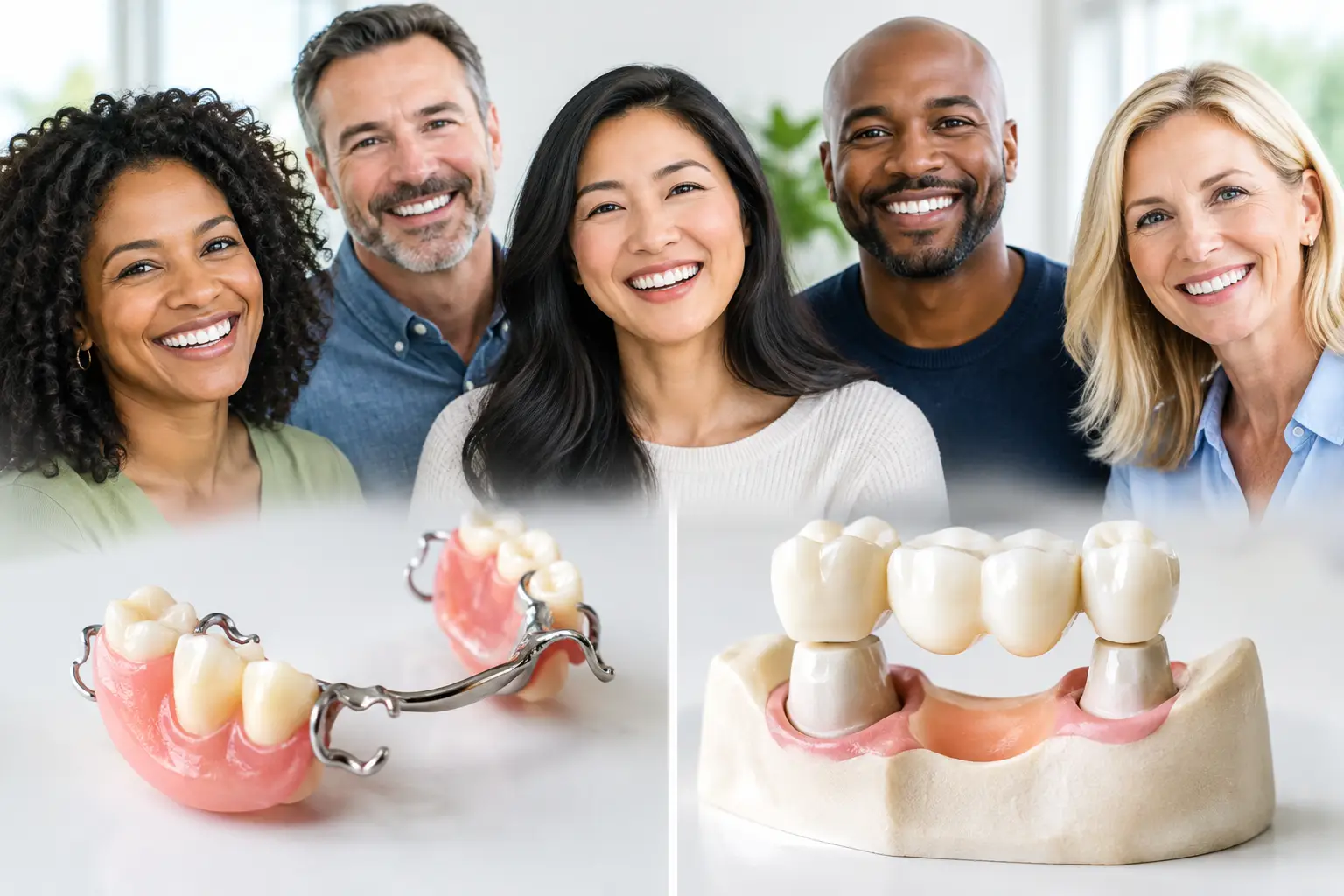
If extraction is necessary, the conversation should not stop there. A dental implant, bridge, or partial denture can restore the space and help prevent neighboring teeth from shifting. The best replacement option depends on bone health, the condition of nearby teeth, budget, timeline, and personal goals.
What to Do Before Your Appointment
A broken tooth deserves timely attention even if it does not hurt. Bacteria can enter through cracks and exposed areas, and a small fracture can spread with normal chewing. If you can find the broken piece, place it in milk or saliva and bring it with you. In limited cases, it may be useful, though it cannot always be reattached.
Rinse your mouth gently with warm water. If there is bleeding, apply light pressure with clean gauze. A cold compress on the outside of the cheek can reduce swelling. Avoid chewing on the damaged side, and choose soft foods until the tooth is examined.
Do not use household glue to reattach a broken piece. These products are not safe for use in the mouth and can interfere with proper dental treatment. Temporary dental repair material from a pharmacy may cover a sharp edge briefly, but it is not a substitute for professional care.
When a Broken Tooth Is a Same-Day Concern
Call for a same-day dental appointment if the break causes significant pain, swelling, uncontrolled bleeding, or a sharp edge that is cutting your tongue or cheek. Prompt care is also wise after a facial injury, even if the tooth appears mostly intact. Some cracks are not obvious without an exam and X-rays.
Swelling in the face or jaw, fever, trouble swallowing, or difficulty breathing requires urgent medical attention. These symptoms can indicate a spreading infection and should not be ignored.
At Riverside Cosmetic Dentist, Dr. Ali Shmara provides personalized restorative and emergency care for patients in Riverside and nearby communities. The goal is not simply to fill a space or cover a crack. It is to help you understand what happened, what treatment will protect your oral health, and what result you can realistically expect before care begins.
A broken tooth may feel alarming, especially when it affects your smile or makes eating uncomfortable. The next best step is a calm, prompt evaluation. With the right diagnosis, even a noticeably damaged tooth can often be repaired in a way that feels comfortable, functions naturally, and lets you smile without hesitation.