A missing tooth changes more than your smile. It can affect how you chew, how clearly you speak, and how confident you feel when you laugh or meet someone new. The best treatments for missing teeth depend on where the tooth is missing, how many teeth are involved, your jawbone health, your budget, and how permanent you want the solution to be.
Some patients want the closest possible replacement to a natural tooth. Others need a practical option that restores function quickly and comfortably. There is no single right answer for everyone, but there is usually a best fit for your situation when the plan is based on both health and appearance.
What happens when a missing tooth is not replaced
When a gap is left untreated, nearby teeth can begin to shift. That movement may change your bite and create new areas that are harder to clean. Over time, the jawbone in that area can also shrink because it is no longer being stimulated by a tooth root.
That is one reason early treatment matters. Replacing a missing tooth is not only about cosmetics. It can help protect your bite, support your facial structure, and reduce the chance of more complex dental work later.
Best treatments for missing teeth by situation
The most effective treatment depends on whether you are missing one tooth, several teeth, or a full arch. Your dentist should also consider gum health, bone support, and whether the surrounding teeth are strong enough to help support a restoration.
Dental implants
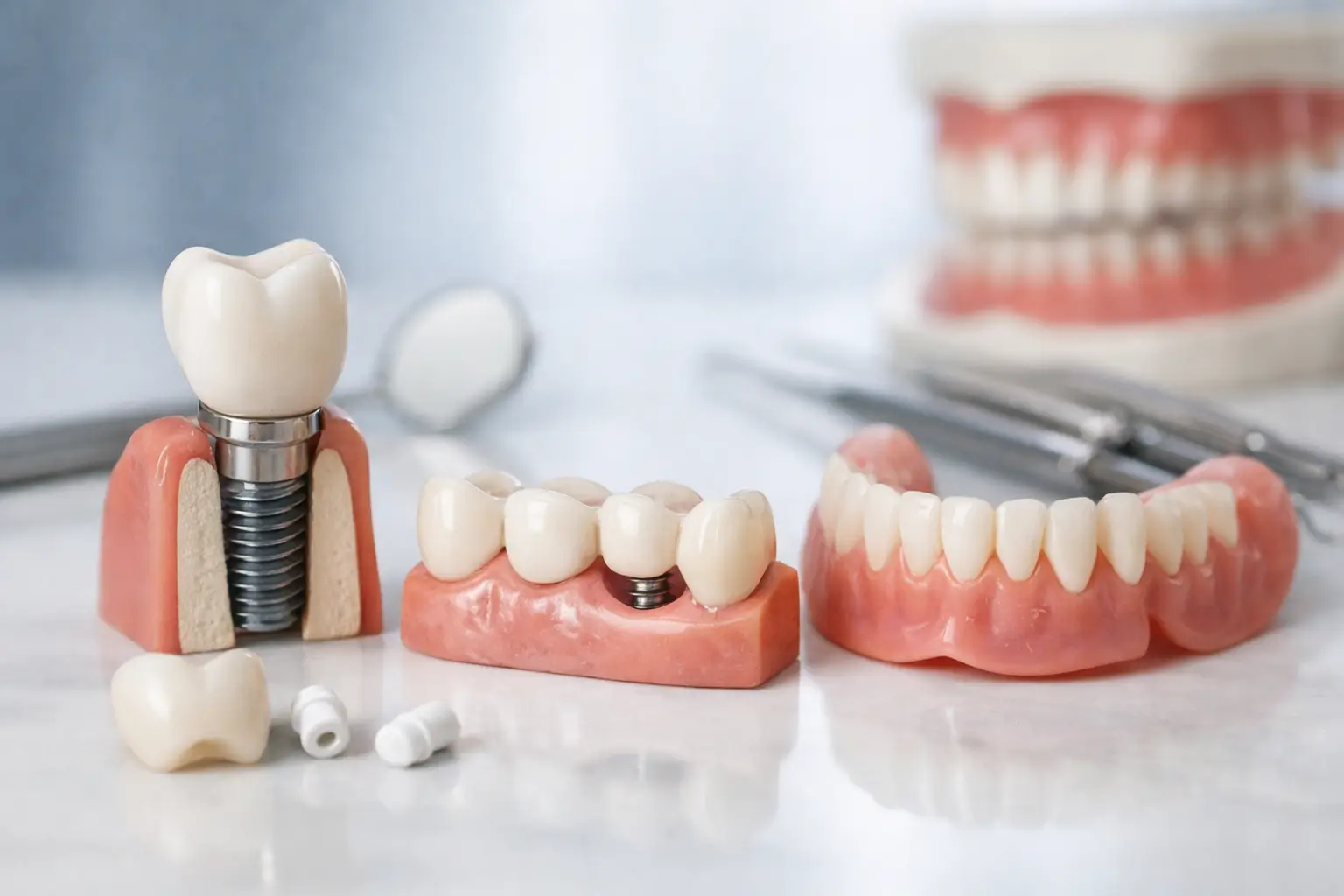
For many adults, dental implants are considered one of the best treatments for missing teeth because they replace both the visible tooth and the root. An implant is placed into the jawbone, then restored with a crown, bridge, or denture depending on how many teeth need to be replaced.
The biggest advantage is stability. Implants feel secure, look natural, and help preserve bone in a way that other options cannot. They also do not rely on neighboring teeth for support, which makes them a conservative choice in many single-tooth cases.
The trade-off is time and cost. Implant treatment usually takes longer than a bridge or denture because healing is part of the process. Some patients also need bone grafting first, especially if the tooth has been missing for a while.
Implants are often ideal if you want a long-term solution and your health, bone structure, and budget support it.
Dental bridges
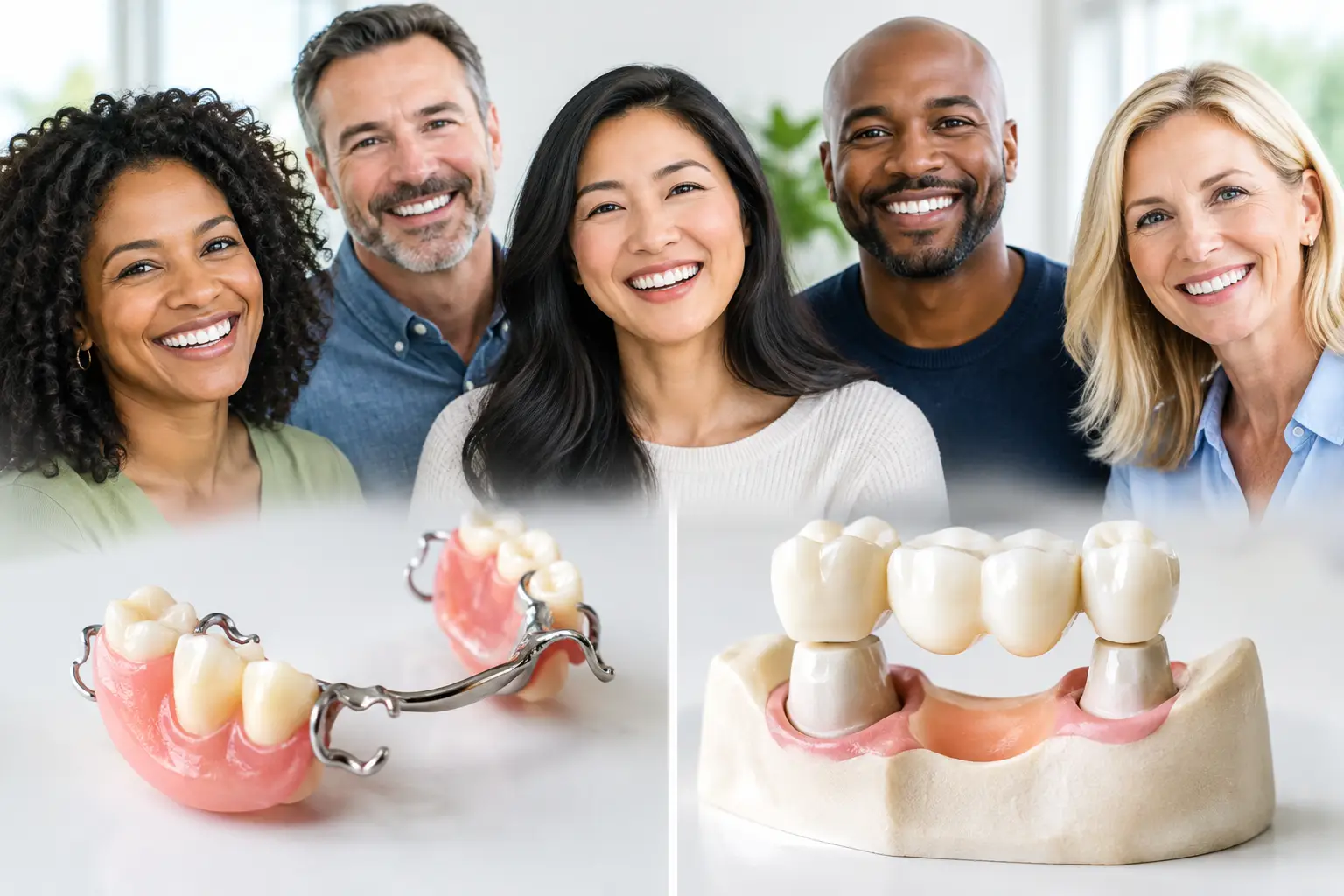
A bridge can be an excellent option when one or a few teeth are missing in a row. A traditional bridge uses the teeth on either side of the gap as anchors, with an artificial tooth in between.
One reason patients choose a bridge is efficiency. Treatment is often completed faster than implant therapy, and the final result can look very natural. Bridges restore chewing function well and can be a strong choice when the neighboring teeth already need crowns.
The main drawback is that the supporting teeth usually need to be reshaped. A bridge also does not replace the tooth root, so it does not stimulate the jawbone the way an implant does. That does not mean it is a poor option. It simply means it works best in the right circumstances.
Partial dentures
If you are missing several teeth in different areas, a partial denture may offer a practical and affordable solution. It is removable and designed to fit around your remaining natural teeth.
Partial dentures can restore appearance and help with chewing, especially when multiple gaps make other treatment plans more complicated. They are also less invasive than surgery-based options.
At the same time, they can feel bulkier than fixed options, and some patients need time to adjust to wearing and removing them. Fit matters a lot. A well-made partial can be very helpful, but it usually does not feel as natural as an implant-supported restoration.
Full dentures
When all teeth in the upper arch, lower arch, or both arches are missing, full dentures remain a time-tested treatment. Modern dentures can be made to look much more natural than many people expect, and they can restore facial support along with basic function.
For some patients, conventional dentures are the most realistic starting point because they are cost-effective and can be delivered without the surgical process of implants. They can be especially helpful after multiple extractions or when extensive decay and damage make saving the remaining teeth unrealistic.
The challenge is stability, especially on the lower arch. Some denture wearers are comfortable with traditional dentures, while others struggle with movement, sore spots, or reduced biting strength.
Implant-supported dentures
If you want more security than a traditional denture can offer, implant-supported dentures are often worth serious consideration. These dentures attach to dental implants, which helps reduce slipping and gives a more confident feel during speaking and eating.
This option bridges the gap between full removable dentures and a fully fixed implant restoration. Many patients appreciate that it offers much better retention without requiring an implant for every missing tooth.
Cost is higher than standard dentures, and implant placement is still a surgical procedure. Still, for many people, the jump in comfort and function makes a real difference in daily life.
How to choose the right tooth replacement option
The best plan usually comes down to a few practical questions. Do you want a fixed or removable solution? Are the teeth next to the gap healthy or already in need of treatment? Has bone loss occurred? Are you replacing one tooth or many?
Lifestyle matters too. If you have a busy schedule and want fewer appointments, a bridge or denture may appeal to you. If you are thinking long term and want maximum stability, an implant may be the stronger investment.
Appearance is another important factor. Front teeth need special planning because even small details affect your smile. Back teeth carry heavy chewing forces, so strength and bite alignment become especially important there.
Cost, value, and long-term thinking
Patients often ask which treatment is cheapest, but a better question is which treatment provides the best value over time. A lower upfront cost can make sense, especially when you need relief quickly. Still, it is worth looking at maintenance, longevity, and whether future replacements are likely.
For example, dentures and partials are usually less expensive at the start, but they may need more adjustments and periodic replacement. Implants tend to cost more initially, yet many patients choose them because of their stability and long-term benefits.
A good treatment conversation should be transparent. You should understand not only the procedure, but also the timeline, expected comfort, maintenance, and likely future costs.
Why timing matters after tooth loss
Waiting too long can limit your options. Bone loss, drifting teeth, gum problems, and uneven wear can all complicate treatment. That does not mean you have missed your chance if the tooth has been gone for years. It just means your dentist may need to rebuild the foundation before placing the final restoration.
This is especially common with implants. If bone has shrunk significantly, grafting may be recommended first. That extra step can improve the outcome and make the final tooth replacement more predictable.
What patients in Riverside should expect from a consultation
A good consultation should feel clear, not rushed. You should leave understanding what is happening in your mouth, what your treatment options are, and why one approach may fit better than another. X-rays, a bite evaluation, and a close look at your gums and surrounding teeth are all part of making the right recommendation.
For patients who feel nervous about treatment, the conversation matters just as much as the dentistry. If you have had a bad experience in the past, you should still be able to ask questions, talk through costs, and move at a pace that feels manageable. In Riverside, many patients are looking for exactly that kind of care – precise treatment paired with a calm, supportive experience.
When missing teeth affect your comfort, confidence, or ability to eat normally, the right next step is not guessing between options. It is getting a personalized evaluation so your treatment fits your health, your goals, and your life.