
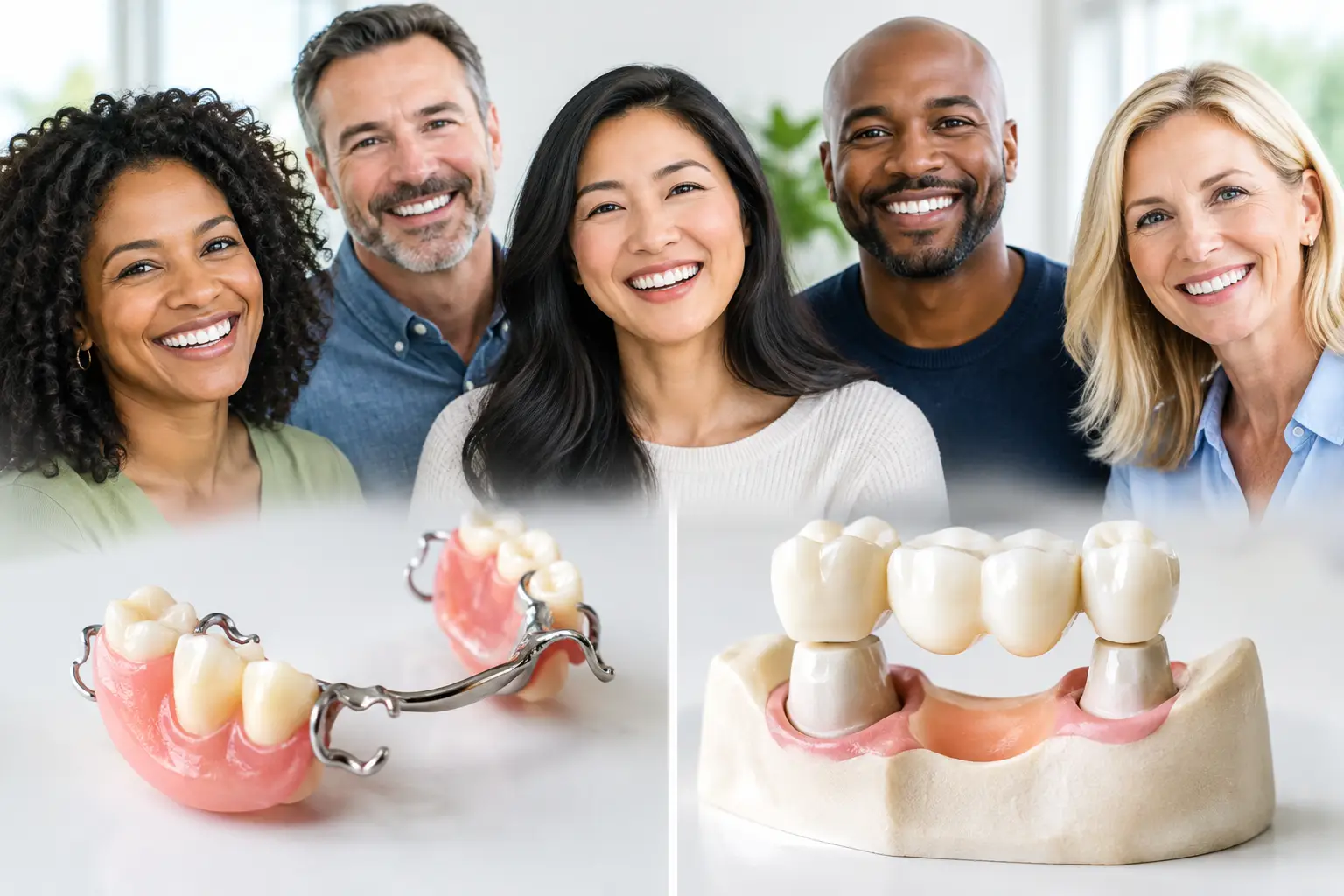
A missing tooth can change more than your smile. It can make chewing uneven, affect the way you speak, and leave nearby teeth more likely to shift over time. When comparing partial dentures vs dental bridges, the best choice is not automatically the fastest or least expensive option. It is the restoration that fits your number of missing teeth, oral health, lifestyle, and long-term goals.
At Riverside Cosmetic Dentist, treatment recommendations are personalized. Dr. Ali Shmara considers the condition of your remaining teeth, gum health, bite, and the natural appearance you want before recommending a solution.
Partial Dentures vs Dental Bridges: The Main Difference
A partial denture is a removable appliance that replaces one or several missing teeth. It typically includes replacement teeth attached to an acrylic or metal base, which rests against the gums and may use clasps or precision attachments for support.
A dental bridge is a fixed restoration. It replaces a missing tooth or teeth by anchoring an artificial tooth, called a pontic, to neighboring teeth or dental implants. A traditional bridge usually requires crowns on the teeth beside the gap, while an implant-supported bridge is held in place by implants rather than natural teeth.
The simplest distinction is this: partial dentures come out for cleaning, while bridges remain in place. That difference affects comfort, care, cost, and which patients are good candidates.
When a Partial Denture May Make Sense
Partial dentures can be a practical option when several teeth are missing in different areas of the mouth. Because one appliance can replace multiple teeth, they are often more affordable upfront than placing several individual crowns, implants, or bridges.
They can also be useful when the neighboring teeth are not ideal bridge supports. For example, if the teeth next to a gap are healthy and do not need crowns, a removable partial may preserve more of their natural structure. A partial denture may also be recommended when a patient needs a temporary tooth replacement while healing after extractions or preparing for a more permanent treatment.
Modern partials can look natural, but they do require an adjustment period. Some patients notice extra saliva, mild pressure, or changes in speech during the first days or weeks. A properly fitted appliance should not cause ongoing pain, and any sore spots should be adjusted promptly by a dentist.
When a Dental Bridge May Be the Better Choice
A bridge often appeals to patients who want a stable, non-removable replacement for one missing tooth or a small group of adjacent missing teeth. Because it is fixed in place, it generally feels more similar to natural teeth during meals and conversation. Many patients also appreciate not having to remove it at night.
A traditional bridge can be especially appropriate when the teeth on either side of the space already have large fillings, fractures, or existing crowns. In that situation, placing crowns to support a bridge may improve both function and appearance without sacrificing healthy tooth structure unnecessarily.
A bridge is not always the right fit. The supporting teeth must be strong enough to handle added biting forces, and healthy gums are essential. If the adjacent teeth are weak, heavily decayed, or affected by gum disease, they may need treatment first. In some cases, an implant-supported option may protect the surrounding teeth more effectively.
Comfort, Appearance, and Everyday Function
Both options can restore a more complete smile, but the experience is different. A bridge is fixed and typically offers greater stability for chewing foods such as meat, raw vegetables, and crusty bread. It is custom-designed to blend with your surrounding teeth, making it a strong cosmetic choice for visible areas of the smile.
A partial denture can also look attractive, particularly when designed with tooth-colored materials and careful attention to shade. However, it rests on the gums and may move slightly under pressure. Some foods can be more difficult at first, and patients may need to chew more slowly or use both sides of the mouth evenly.
For patients who have felt self-conscious about gaps in their smile, either treatment can provide a meaningful boost in confidence. The right option is the one that feels secure, looks natural, and works with your day-to-day routine.
Cost: Upfront Price vs Long-Term Value
Partial dentures usually have a lower initial cost than a traditional bridge. This can make them an accessible choice for patients replacing multiple teeth or working within a limited budget. However, partials may need periodic adjustments, relining, or replacement as the gums and bone change over time.
Bridges generally cost more initially because they involve detailed preparation, custom fabrication, and multiple appointments. Their longevity depends on excellent home care, the health of the supporting teeth, and regular dental visits. A well-maintained bridge can last many years, but decay or gum disease around its supporting teeth can compromise it.
The most helpful question is not simply, “Which option costs less?” Ask which treatment addresses your needs now without creating avoidable problems later. A transparent treatment plan should explain the expected fees, what insurance may cover, and available financing or non-insurance options before you decide.
Cleaning and Maintenance Requirements
Partial dentures must be removed daily for cleaning. They should be brushed with a denture cleaner rather than regular toothpaste, which can be abrasive, and soaked as directed. Your gums, tongue, and remaining teeth still need daily brushing, and you should not wear a partial around the clock unless your dentist specifically advises it.
A bridge is brushed like natural teeth, but the area underneath the artificial tooth needs special attention. Floss threaders, interdental brushes, or water flossers can help remove plaque beneath the bridge and near the gumline. Skipping this step can lead to inflammation, bad breath, and decay around the supporting teeth.
Neither option is maintenance-free. Consistent home care and professional cleanings protect the investment and help your dentist identify small concerns before they become more complex.
How Your Oral Health Affects the Decision
The condition of your mouth matters as much as the number of teeth you are replacing. Active gum disease, untreated cavities, teeth grinding, and a poorly balanced bite can change the recommended plan. A bridge placed before these issues are controlled may be at greater risk of failure. A partial denture may fit poorly if gum inflammation or tooth movement is left unaddressed.
Bone loss is another consideration. After a tooth is lost, the jawbone in that area can gradually shrink because it no longer receives stimulation from a tooth root. Neither a traditional bridge nor a partial denture prevents this process in the same way that a dental implant can. That does not make bridges or partials poor choices, but it is a trade-off worth discussing openly.
Choosing the Right Tooth Replacement Option
There is no universal winner in partial dentures vs dental bridges. A partial denture may be more suitable when multiple teeth are missing, preserving adjacent teeth is a priority, or a removable and lower-cost solution is preferred. A bridge may be the stronger choice when the gap is limited, neighboring teeth can support it, and you want a fixed restoration with a natural feel.
A thorough exam and X-rays make this decision far clearer than an online comparison can. Patients in Riverside can learn more about the practice through the Riverside, California page, meet Dr. Ali Shmara on the Dentist page, or explore services on the Riverside Cosmetic Dentist homepage. A compassionate consultation can turn a confusing decision into a practical plan for eating comfortably, smiling confidently, and protecting the teeth you still have.