
You do not need to know every dental term to make a smart cosmetic decision. What you do need is a clear cosmetic dentistry treatment guide that helps you understand what changes are possible, what each option actually fixes, and where appearance and long-term oral health need to work together.
For many patients, cosmetic dentistry starts with one concern that has been bothering them for years – a chipped front tooth, staining that will not lift, gaps, worn edges, or a smile that looks older than they feel. The right treatment is rarely about choosing the most dramatic option. It is about matching the problem, your goals, your timeline, and your budget with a plan that looks natural and holds up well.
How to use this cosmetic dentistry treatment guide
A good cosmetic plan should improve your smile without ignoring bite issues, decay, gum health, or damaged teeth underneath. That is why the first step is not picking veneers because they look popular online. It is getting a proper exam, photos, and X-rays so your dentist can see the full picture.
Some cosmetic concerns are simple and can be handled conservatively. Others need restorative work first. If a tooth is cracked, heavily filled, or structurally weak, a crown may make more sense than bonding. If a missing tooth is affecting your bite and facial support, whitening nearby teeth will not solve the real issue.
That is also why patients often do best with a practice that can handle both cosmetic and restorative dentistry in one place. When smile improvements are planned alongside function, results tend to feel more stable, more comfortable, and more realistic.
The most common cosmetic dentistry treatments
Teeth whitening
Whitening is often the fastest way to brighten a smile, but it works best on natural tooth enamel and certain types of staining. It can lift yellowing from coffee, tea, wine, and age, but it will not change the color of crowns, veneers, or fillings already in your mouth.
This matters more than people expect. If your front teeth have older restorations, whitening the surrounding teeth may create a mismatch. In that case, your dentist may suggest whitening first and then replacing visible restorations to blend with the new shade.
Whitening is a strong option when your teeth are healthy and your main goal is a cleaner, fresher look. It is less ideal if the issue is shape, spacing, chips, or uneven edges.
Dental bonding
Bonding uses tooth-colored material to reshape small flaws. It is commonly used for chips, minor gaps, worn corners, and irregular contours. The appeal is obvious – it is conservative, efficient, and usually more affordable than veneers.
The trade-off is durability. Bonding can look excellent, especially in skilled hands, but it is generally more prone to staining and wear over time than porcelain. For patients who grind, bite their nails, or want a long-lasting high-polish finish, another option may be better.
Veneers
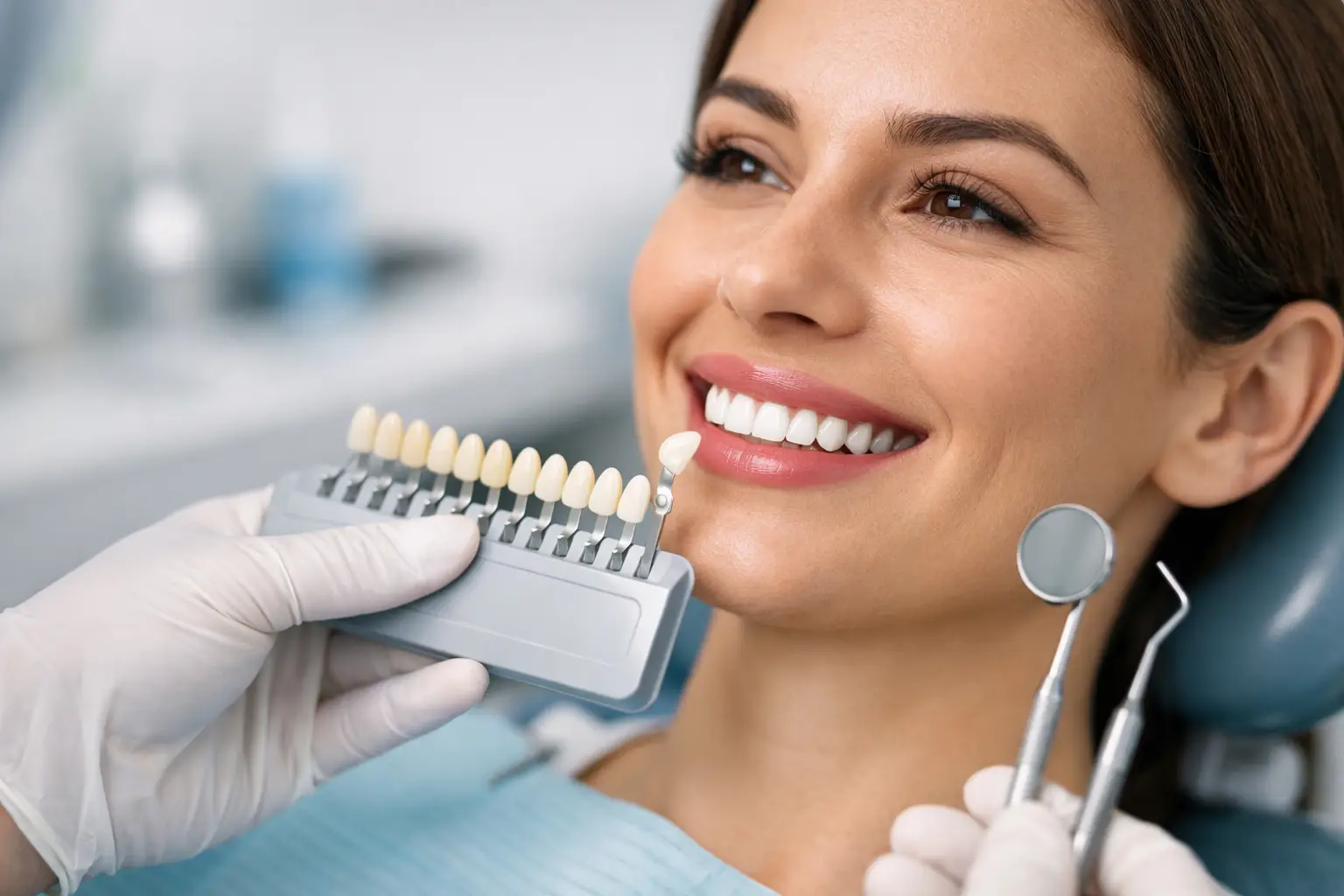
Veneers are thin porcelain coverings placed on the front of teeth to improve color, shape, symmetry, and proportion. They are one of the most versatile cosmetic treatments because they can address several concerns at once.
They are also one of the most misunderstood. Veneers are not the right answer for every smile, and they should not be used to hide untreated dental disease or significant bite problems. Done well, veneers look refined, natural, and balanced with your face. Done without careful planning, they can feel bulky or too bright.
Patients who want a noticeable but elegant upgrade often do well with veneers, especially when discoloration, unevenness, and shape concerns all overlap.
Crowns for cosmetic and structural repair
Crowns are often thought of as purely restorative, but they can play an important cosmetic role. When a tooth is badly broken, weakened by a large filling, worn down, or treated with a root canal, a crown can restore both strength and appearance.
This is a key point in any cosmetic dentistry treatment guide. Sometimes the best-looking treatment is not the most cosmetic-sounding one. If your tooth needs support, a crown may be the safer and better-looking long-term solution.
Dental implants
If you are missing a tooth, an implant can restore the smile and the function of that space. Cosmetic improvement is part of the benefit, but implants also help support chewing, preserve jawbone, and prevent neighboring teeth from shifting.
Implants typically require more time and planning than bonding or whitening. They are a bigger investment up front, but they are often the most complete replacement option when a tooth is lost.
Which treatment fits which concern?
If your teeth are healthy and you mainly want them brighter, whitening may be enough. If you have one or two small flaws, bonding can be a practical choice. If you want a broader smile makeover with changes to shape, color, and uniformity, veneers may be appropriate. If a tooth is damaged or heavily restored, a crown may protect it while improving how it looks. If a tooth is missing, an implant or bridge is usually part of the conversation.
What makes this less straightforward is that many people have more than one issue at once. A patient may need whitening on some teeth, bonding on one chipped tooth, and a crown on another that has old damage. Good cosmetic dentistry is often a coordinated plan, not a single treatment.
What to think about before saying yes
The best cosmetic results come from clear expectations. That includes discussing color, shape, maintenance, lifespan, and cost before treatment begins. A brighter smile can look beautiful, but the brightest possible shade is not always the most natural one. Closing every tiny gap may sound appealing, but overbuilding teeth can affect appearance and bite.
Comfort matters too. Patients who have had difficult dental experiences often postpone cosmetic work because they assume it will be painful or complicated. In reality, many cosmetic procedures are easier than expected when the dentist explains each step, uses gentle technique, and builds the plan around your comfort level.
Budget is another real factor, and it should be discussed openly. Sometimes a phased approach makes the most sense. You might start with the treatment that addresses health and function first, then move to elective cosmetic improvements in stages. That approach can be both financially manageable and clinically smart.
Why evaluation matters more than trends
Online before-and-after photos can be helpful, but they can also create unrealistic expectations. Lighting, editing, and selective case presentation can make treatment seem simpler than it is. Your smile has its own anatomy, bite forces, gum shape, existing dental work, and facial proportions. That is why a personalized evaluation matters more than a trend.
A careful cosmetic consultation should look at more than just your front teeth. It should consider gum health, enamel quality, jaw function, and whether you clench or grind. If those factors are skipped, even attractive cosmetic work may not last as well as it should.
For patients in Riverside who want both aesthetics and dependable long-term care, it helps to choose a practice that can handle the full range of needs, from cleanings and fillings to veneers, crowns, implants, and emergency treatment. That kind of continuity makes treatment planning simpler and often more predictable.
Choosing a dentist for cosmetic work
You are not just choosing a procedure. You are choosing the judgment behind it. A cosmetic dentist should be able to explain why one option fits better than another, where a conservative approach is possible, and when cosmetic goals need to be balanced with structural concerns.
Look for clear communication, thoughtful planning, and a willingness to answer practical questions. You should understand what the treatment will change, what it will not change, how long it may last, and what maintenance is involved. If the discussion feels rushed or vague, that is useful information.
Patients often feel more confident when they work with a dentist who offers comprehensive care rather than isolated cosmetic services. Riverside Cosmetic Dentist, Dr. Ali Shmara, focuses on that kind of patient-centered planning, where appearance, comfort, and oral health are considered together rather than separately.
If you are comparing providers, it can help to review the practice background, the dentist’s approach, and whether the office offers the kind of continuity you may need if your treatment plan changes. The Riverside page, the dentist page, and the main practice information are all worth reviewing when you are deciding what kind of care feels right for you.
Cosmetic dentistry should make you feel more comfortable smiling, speaking, and showing up in daily life. The right plan is not the flashiest one. It is the one that fits your teeth, your goals, and your life well enough that the result feels like you – just more confident.