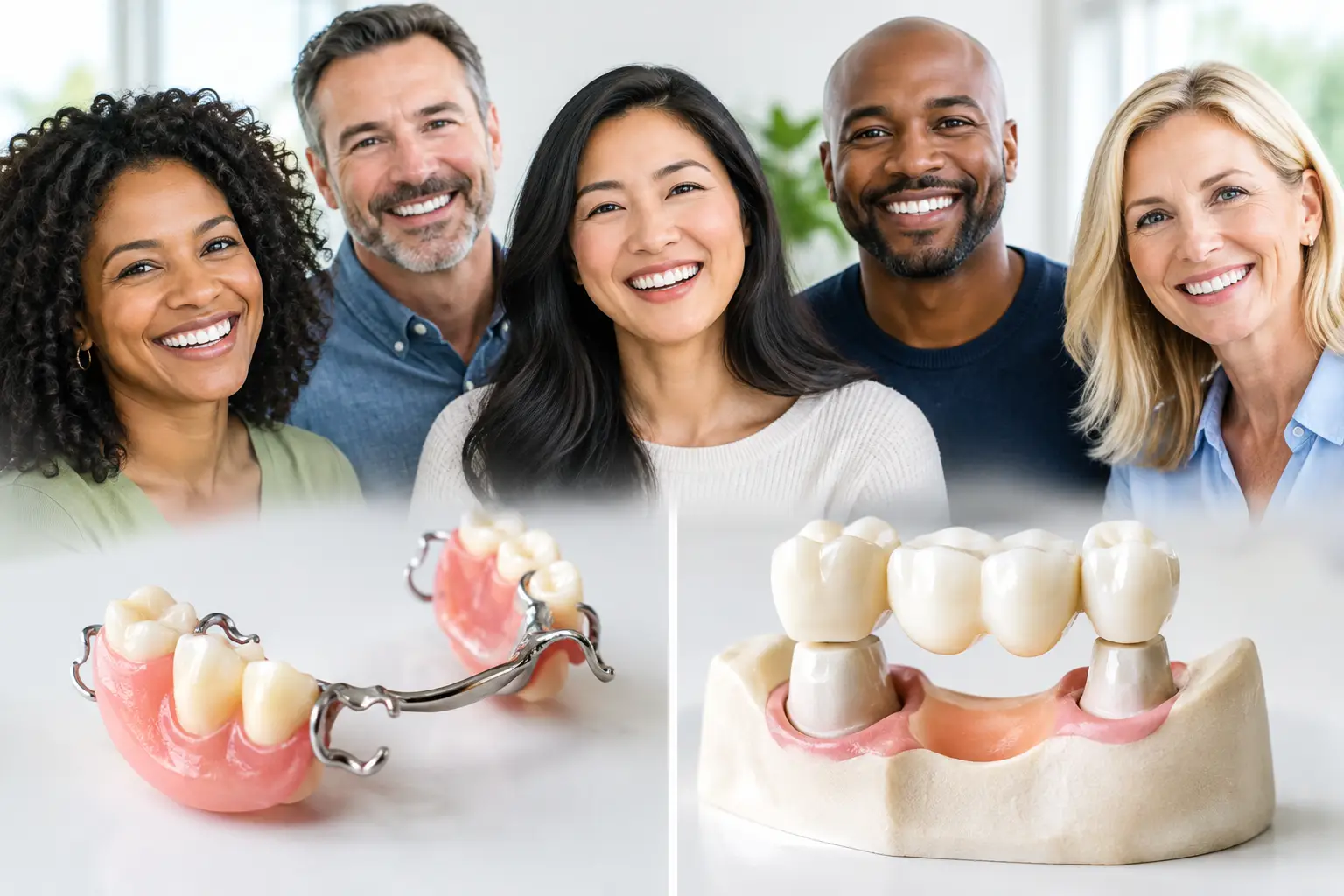
When considering implant supported dentures vs traditional dentures in Riverside, California, the right choice is not simply about replacing missing teeth. It is about choosing the level of stability, comfort, maintenance, treatment time, and investment that makes sense for your life. A loose lower denture can turn an ordinary meal into a stressful experience, shifting when you talk and creating sore spots. Consulting a skilled dentist in Riverside, California can help you determine the most effective treatment plan for your smile.
Both options can restore the appearance of a complete smile and improve your ability to eat and speak. The differences become clearer when you look at how each one stays in place and what it asks of your mouth over time.
Implant Supported Dentures vs Traditional Dentures: The Main Difference
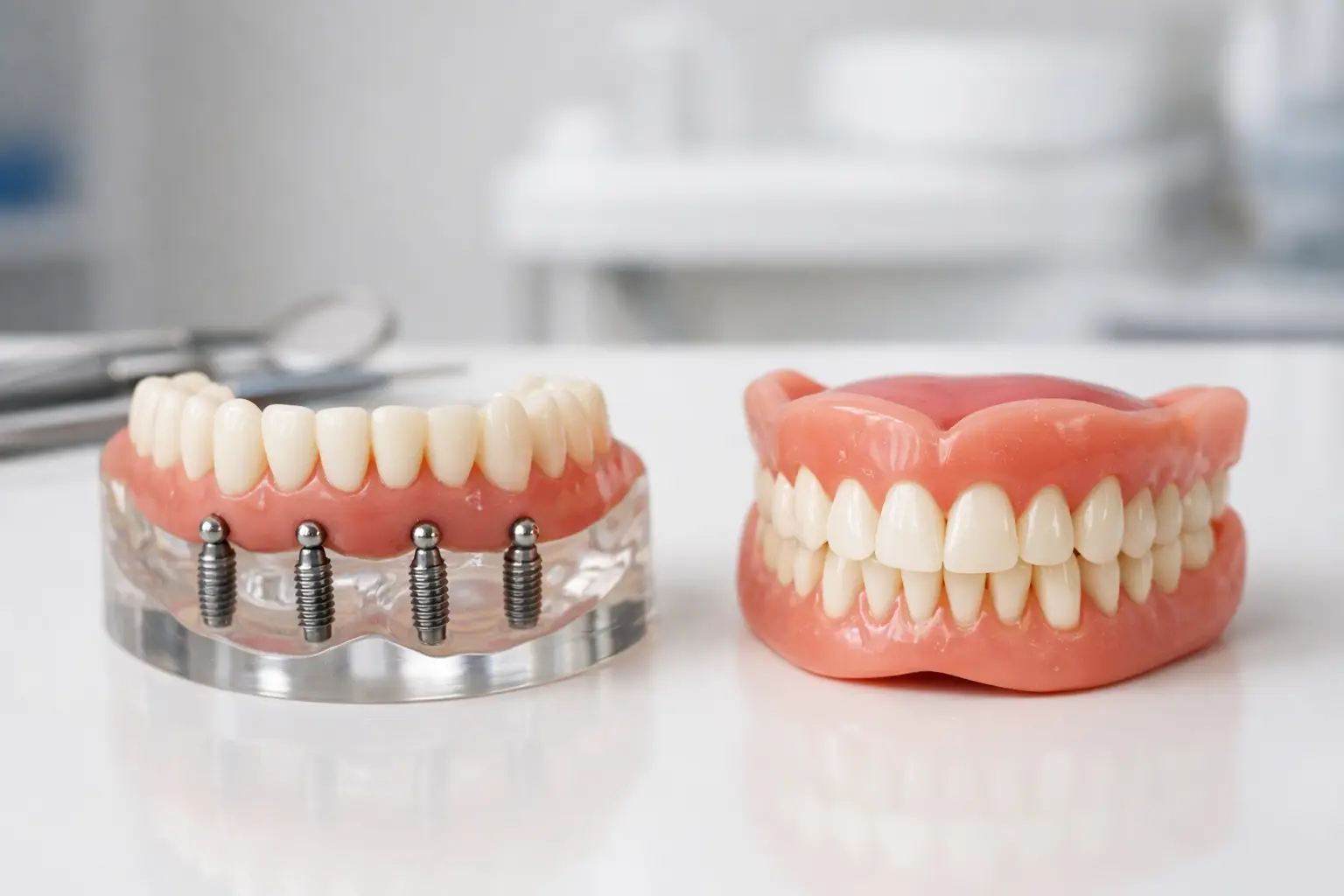
Traditional dentures rest directly on the gums. A full upper denture often stays in place with suction against the palate, while a lower denture relies more heavily on the shape of the jaw ridge, your muscles, and sometimes adhesive. They are removable and can replace all teeth in an upper or lower arch.
Implant supported dentures are secured by dental implants placed directly in the jawbone. Depending on the treatment plan outlined by your Riverside dentist, the denture may snap onto implants and remain removable for cleaning, or it may be fixed in place and removed only during professional visits. The implants provide anchors that make the denture feel substantially more stable.
Tooth roots normally stimulate the jawbone when you chew. After teeth are lost, the bone can gradually shrink because that stimulation is gone. Dental implants act like replacement roots, helping preserve bone in the areas where they are placed.
Traditional Dentures: A Practical, Time-Tested Option
Conventional dentures remain a valuable solution for many patients. They can be made without oral surgery, generally involve a shorter treatment timeline, and have a lower upfront cost than implant treatment. For someone who needs teeth replaced promptly, has medical limitations, or wants an economical starting point, traditional dentures may be the right answer.
Modern dentures can look natural when they are carefully designed for facial proportions, gum color, tooth shape, and smile appearance. A well-made denture can restore support to the lips and cheeks, helping a person look less sunken after tooth loss.
Still, conventional dentures sit directly on the gums and can move while chewing or speaking. Lower dentures are especially prone to movement because there is no broad palate for suction. Over time, changes in the jawbone can affect the fit, causing a denture to become loose and require relining, adjustment, or replacement.
Who May Be a Good Candidate for Traditional Dentures in Riverside, CA?
Traditional dentures can be a sensible choice for patients who prefer to avoid surgery, need a faster tooth-replacement solution, or are working within a specific budget. They may also serve as an immediate temporary option after extractions while the gums heal and a long-term implant plan is considered.
Regular visits with a dentist in Riverside, California ensure proper fit and follow-up care. Dentures should not be treated as a one-time purchase, as ongoing evaluations help identify sore areas, shifting fit, oral tissue concerns, and jawbone changes.
What Can Implant Supported Dentures Change
Implant supported dentures are designed for patients who want maximum security from their replacement teeth. The implants are surgically placed in the jaw and allowed to integrate with the bone. After healing, they support a custom denture through attachments, a bar, or a fixed bridge design.
- Removable Overdentures: Often use two or more implants, especially on the lower jaw. They can be taken out at home for cleaning but click securely into place during the day.
- Fixed Restorations: Typically use more implants and stay permanently in place, removed only by your Riverside dentist during routine maintenance visits.
Implant support reduces unwanted movement, improves chewing efficiency, and eliminates the daily uncertainty of slipping. It may also allow an upper restoration to be made without covering the palate, making eating feel much more natural while helping to slow jawbone loss.
The Trade-Offs to Consider When Getting Implants in Riverside, California
Implant treatment requires surgery, healing time, and careful planning. Some patients need bone grafting before implants can be placed, particularly if teeth have been missing for many years. The full process can take several months, though temporary teeth are typically provided during treatment.
- Cost & Investment: Implant supported dentures require a higher upfront investment due to surgery, implant components, custom restorations, and specialized imaging. Many patients view the stability and bone-preservation benefits as a worthwhile long-term investment.
- Daily Maintenance: Fixed teeth require thorough cleaning around the gums and implant sites using special brushes, flossing tools, or water flossers. Removable overdentures must be removed and cleaned daily to prevent inflammation.
- Comfort, Function, and Appearance Compared
Traditional dentures work well for softer foods, but some people limit firm or crunchy foods due to movement and discomfort. Implant support offers stronger bite stability, allowing patients to enjoy a broader range of foods.
Speech can improve with either option once you adapt. Because implants stabilize the restoration, they often shorten the adjustment period for patients who previously struggled with slipping.
Appearance depends heavily on treatment planning and craftsmanship. An experienced dentist in Riverside, California considers tooth shade, lip support, and facial balance to create a natural-looking smile with either option.
How to Decide Which Option Is Right for You
The better choice depends on your oral health, bone volume, medical history, budget, and treatment preferences. A thorough evaluation with your Riverside dentist should include an examination, digital imaging, a review of your bite, and a discussion of your personal goals.
At Riverside Cosmetic Dentist, the goal is to make this decision clear and manageable. A personalized consultation can clarify what your mouth needs and help you select the treatment that best supports your confidence for years to come.