
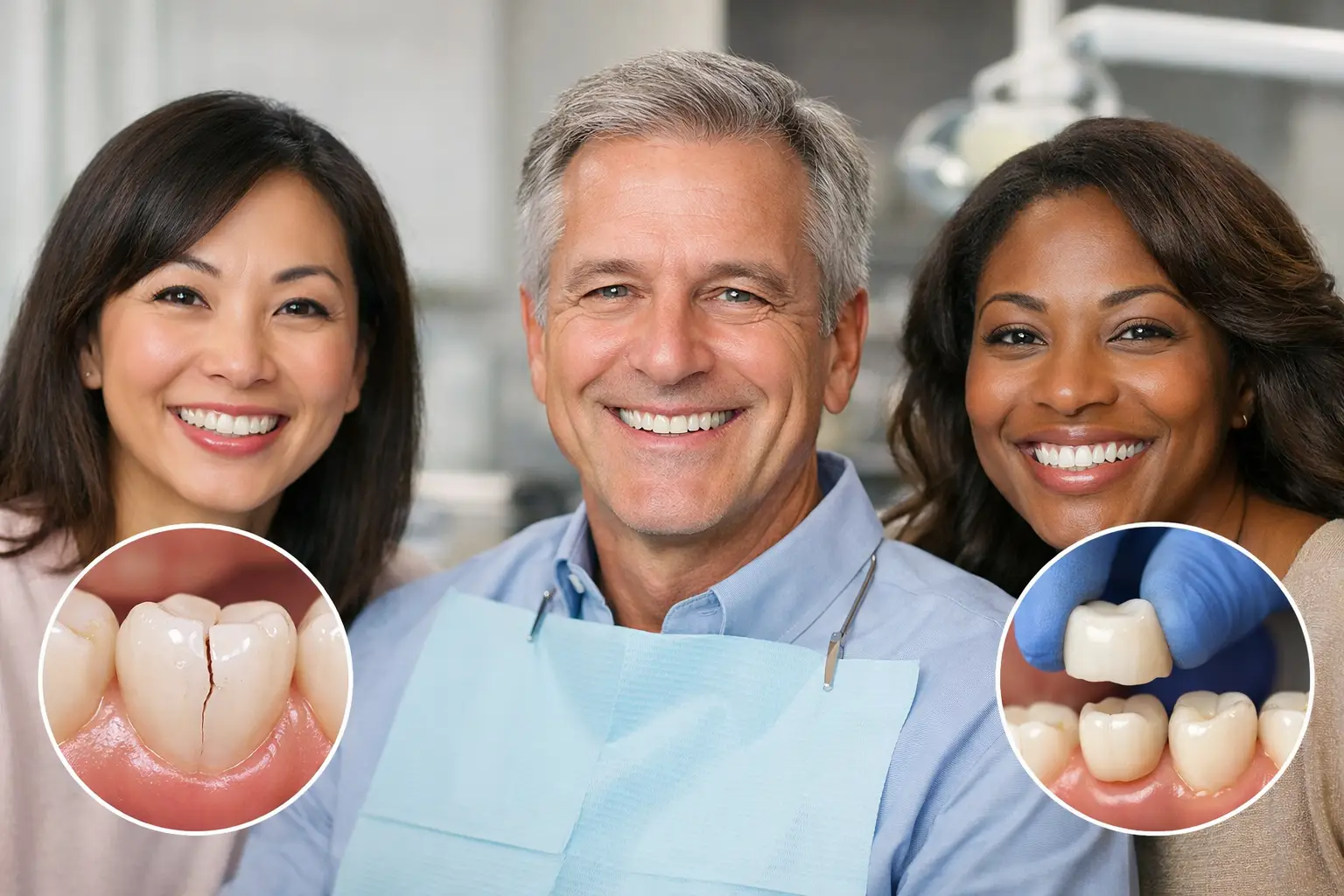
A crack in a tooth can begin with one sharp sting when you bite down on a chip, or with a vague ache that comes and goes for weeks. Either way, it deserves attention. Understanding how crowns restore cracked teeth can help you make a calm, informed decision before a small fracture becomes a painful emergency or a lost tooth.
A dental crown is a custom-made covering that fits over the visible portion of a damaged tooth. It does more than improve appearance. When properly planned and placed, it supports the remaining tooth structure, holds cracked sections together, and helps you chew comfortably again.
Why a Cracked Tooth Needs More Than a Quick Fix
Teeth are strong, but they are not indestructible. Biting hard foods, grinding or clenching, large older fillings, trauma, and natural wear can all contribute to cracks. Some cracks stay limited to the enamel, the hard outer layer of the tooth. Others extend deeper toward the dentin or the pulp, where the tooth’s nerve and blood supply are located.
A cracked tooth does not always hurt constantly. Many patients notice pain only when releasing a bite, sensitivity to cold or sweets, or discomfort that seems difficult to pinpoint. That intermittent nature can be misleading. Every time pressure is applied to the tooth, the crack may flex slightly and widen.
A filling can repair a small cavity or minor chip, but it does not always provide enough support for a tooth with a significant crack. If too much tooth structure has been weakened, placing another filling may leave the remaining walls vulnerable to splitting. A crown is often recommended when the goal is to preserve the tooth rather than repeatedly repair it.
How Crowns Restore Cracked Teeth
The central benefit of a crown is protection. After the dentist carefully removes damaged or weakened areas and shapes the tooth, the crown covers it like a precisely fitted protective shell. It redistributes biting forces around the tooth instead of allowing one thin, cracked area to take the full pressure of chewing.
This support can prevent a crack from progressing in many cases. The crown also restores the tooth’s shape, height, and chewing surface, so your bite can function more naturally. For a visible tooth, materials can be selected and shaded to blend beautifully with your surrounding smile.
A crown does not literally fuse a deep crack back together. Rather, it stabilizes the tooth structure that remains and reduces the forces that can drive the fracture farther. That distinction matters. The earlier a tooth is evaluated and protected, the more likely it may be to remain restorable.
When a Crown Is Often the Best Option
Crowns are commonly recommended for teeth with large fractures, weakened cusps, extensive fillings, or damage after a root canal. They can also be appropriate when a tooth is badly worn from grinding or when a previous restoration has failed and little healthy tooth remains.
The exact recommendation depends on the crack’s location, depth, direction, and the condition of the tooth’s nerve. A crack that stops above the gumline may be very manageable with a crown. A fracture that extends far below the gumline or splits the root can have a less predictable outlook. In those situations, extraction and tooth replacement may be discussed honestly as part of your treatment plan.
What Happens During Crown Treatment
Your visit begins with a thorough examination. Your dentist may use X-rays, bite testing, magnification, and a close visual evaluation to identify the likely source of pain. Cracks can be challenging to diagnose because they are sometimes too fine to appear clearly on an X-ray, so your symptoms and bite pattern are valuable clues.
If a crown is appropriate, the tooth is gently prepared under local anesthetic. The dentist removes unsupported tooth structure and creates space for the final crown. An impression or digital scan is then used to design a restoration that fits your tooth and bite.
In many cases, a temporary crown protects the prepared tooth while the final crown is being made. At the final appointment, the dentist checks the fit, color, and bite before bonding the crown in place. The result should feel secure and comfortable, not bulky or unnatural.
Some cracked teeth need additional care before a crown can be placed. If the crack has allowed bacteria to irritate or infect the pulp, root canal treatment may be needed first. This is not a failure of the crown treatment. It is a way to remove infection, relieve pain, and create a stable foundation for restoring the tooth.
Choosing a Crown Material That Fits Your Smile
Modern crowns are designed with both strength and appearance in mind. All-ceramic and porcelain crowns are popular for front teeth and many visible areas because they can reflect light similarly to natural enamel. Zirconia is known for its strength and can be an excellent choice for back teeth that handle heavier chewing forces.
There is no single best material for every patient. Your dentist will consider the tooth’s location, how much pressure it receives, your bite, your cosmetic goals, and the amount of natural tooth structure left. If you grind your teeth at night, a night guard may be recommended to help protect both the crown and your other teeth.
What a Crown Can and Cannot Do
A well-made crown can make a cracked tooth look and function remarkably well, but it still needs care. The tooth underneath remains vulnerable to decay near the crown’s edge if plaque is allowed to build up. Brushing twice daily, cleaning between teeth, and keeping regular dental visits protect the investment you have made in your smile.
Crowns can last many years, but longevity varies. Bite forces, oral hygiene, grinding, diet, and regular professional care all affect how long a restoration performs. Avoid using teeth to open packages, chew ice, or bite hard nonfood objects. Those habits can damage natural teeth and restorations alike.
It is also wise to recognize that a crown cannot save every fractured tooth. If a crack travels vertically through the root, or if the tooth is too damaged to support a restoration, extraction may be the healthier option. A trustworthy dentist will explain why a crown is recommended, what the prognosis looks like, and what alternatives are available before treatment begins.
Do Not Wait for Severe Pain
A cracked tooth may become more painful without warning, especially if the nerve becomes inflamed or infected. Contact a dentist promptly if you have pain on biting, swelling, a broken piece of tooth, temperature sensitivity that lingers, or a tooth that feels different when you close your mouth.
For patients in Riverside and nearby communities, Riverside Cosmetic Dentist provides careful evaluation for damaged and painful teeth, including same-day appointments when available. Dr. Ali Shmara and the team focus on clear explanations, gentle care, and treatment plans that address both the health and appearance of your smile. You can also find practice information through the Riverside, California page and learn more about your provider on the dentist page.
A cracked tooth can feel unsettling, but timely care often gives you a strong path forward. Scheduling an evaluation while the tooth is still restorable can be the step that protects your comfort, your confidence, and your natural smile.