A missing molar can change more than one meal. Because molars do most of the heavy chewing, even one missing back tooth may cause you to favor the other side, avoid certain foods, or notice nearby teeth shifting over time. The best options for replacing molars depend on the condition of your gums and jawbone, the number of teeth missing, your budget, and how permanent you want the solution to be.
For many patients, the right choice is not simply the most expensive treatment or the quickest one. It is the option that restores dependable chewing, supports your bite, and feels manageable from both a health and financial standpoint. A thorough exam and X-rays help identify the treatment that makes sense for your mouth.
Why Replacing a Missing Molar Matters
Molars are built to absorb force. When one is lost, the teeth around it can begin to tip or drift into the open space. The tooth above it may also move downward because it no longer has an opposing tooth to bite against. These changes can affect how your teeth meet, make cleaning more difficult, and add stress to other teeth.
A missing molar does not always cause immediate pain, especially if it is far in the back. That can make it easy to postpone treatment. Still, addressing the space earlier often gives you more replacement choices and may help avoid more complex care later.
There are exceptions. If a wisdom tooth is removed and it was not contributing to a functional bite, replacement is usually unnecessary. The same may be true in limited situations where the last molar is missing and there is no opposing tooth. Your dentist can explain whether leaving the space alone is a reasonable choice in your case.
Best Options for Replacing Molars
Dental implants: the closest match to a natural tooth
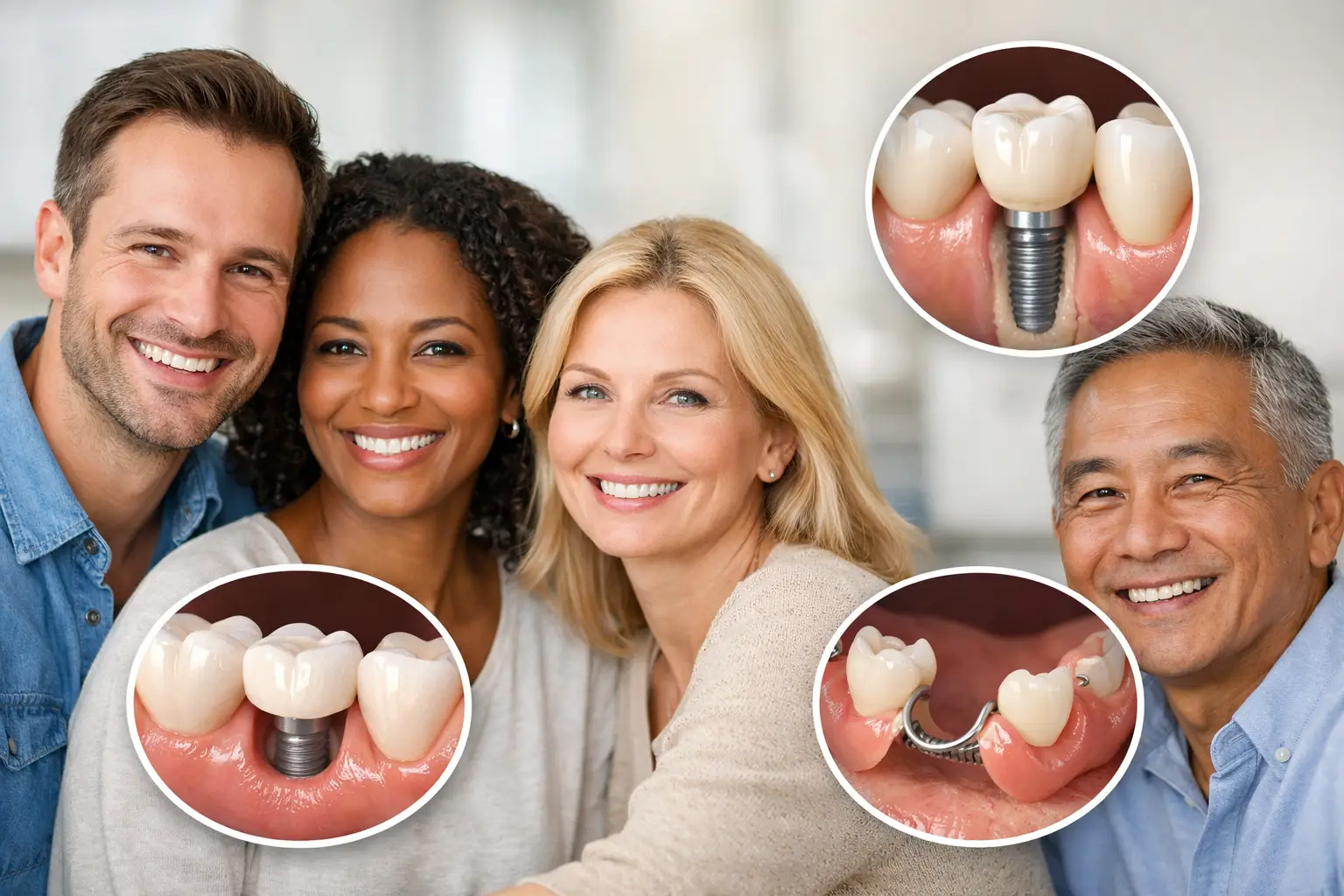
A dental implant replaces the tooth root with a small post placed in the jawbone. After healing, a custom crown is attached to create the visible chewing surface. For a single missing molar, an implant-supported crown is often considered the most complete replacement because it stands independently rather than relying on neighboring teeth.
Implants can provide excellent chewing strength, help preserve bone in the area, and look and feel very natural. They are also designed to be a long-term solution with good home care and regular dental visits. Unlike a bridge, an implant does not require reshaping the teeth next to the gap.
The trade-off is time and upfront cost. Implant treatment may take several months because the implant needs time to integrate with the bone before the final crown is placed. Some patients also need bone grafting first if the tooth has been missing for a long time or there has been bone loss from gum disease. Smoking, uncontrolled diabetes, active gum disease, and certain medical conditions can affect candidacy and healing, but they do not automatically rule treatment out.
Dental bridges: a fixed option without implant surgery
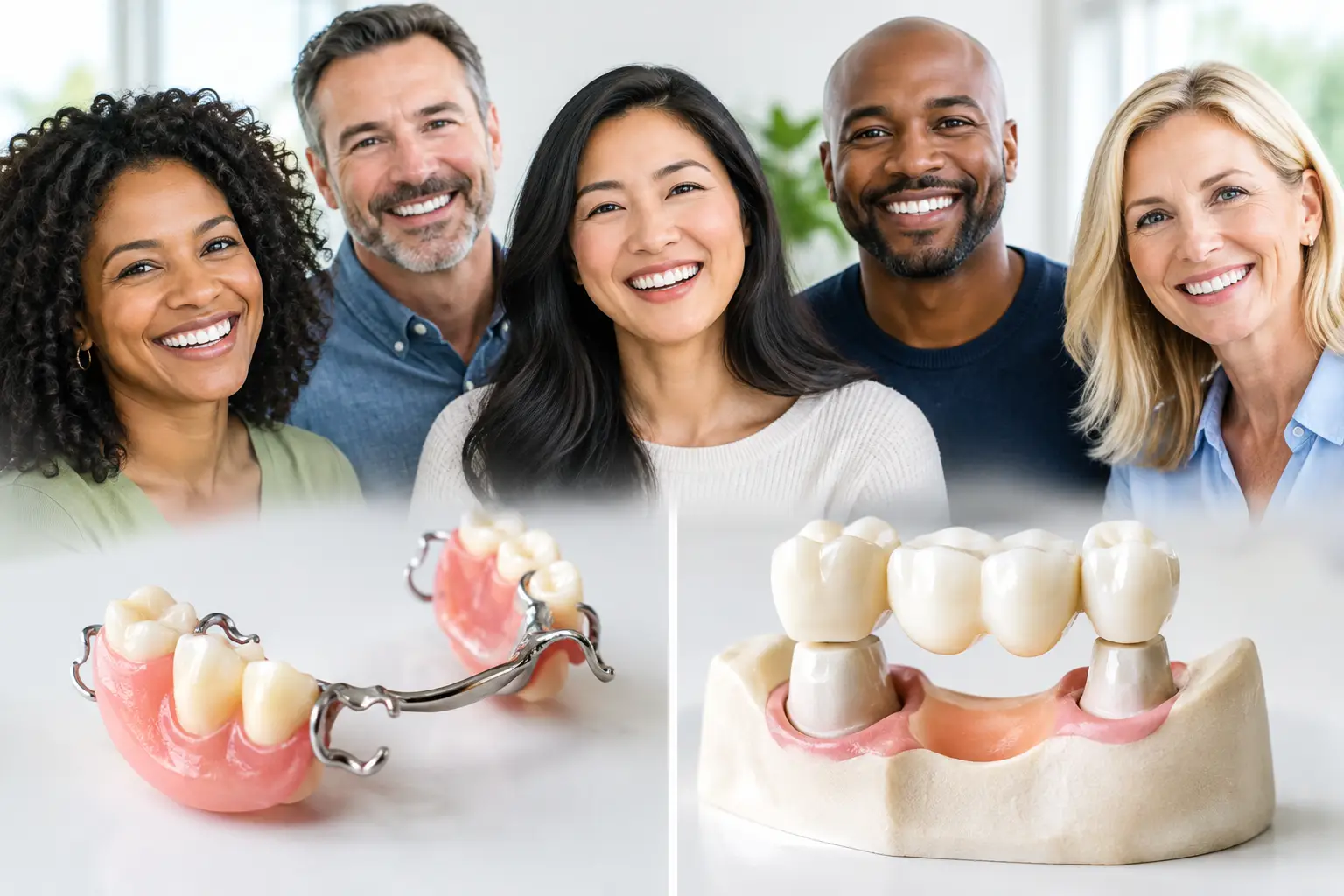
A dental bridge fills the space by connecting an artificial tooth to crowns placed on the teeth beside it. It is fixed in place, so it does not come out for cleaning, and it can restore chewing function relatively quickly once the supporting teeth are prepared.
A bridge can be a practical choice when the neighboring teeth already need crowns because of large fillings, fractures, or existing wear. In that situation, using those teeth as bridge supports may be an efficient way to restore the missing molar.
The main consideration is that a traditional bridge requires altering the adjacent teeth. It also does not replace the root under the missing tooth, so it does not prevent bone loss in that specific area. Cleaning beneath a bridge takes a little extra attention, usually with floss threaders or another recommended tool. With consistent care, a well-made bridge can serve patients very well for many years.
Implant-supported bridges: for several missing back teeth
When two or more neighboring molars are missing, an implant-supported bridge may be more efficient than placing a separate implant for every tooth. A limited number of implants can support a bridge designed to replace multiple teeth. This approach avoids placing crowns on healthy natural teeth and can provide a stable, fixed result.
Whether this option works depends on the length of the missing area, the amount of available bone, bite forces, and the health of the remaining teeth. It is often worth discussing when there is a larger gap in the back of the mouth but enough healthy foundation for implant treatment.
Removable partial dentures: a more affordable replacement
A removable partial denture replaces one or more missing teeth with a custom appliance that rests on the gums and attaches around remaining teeth. It is typically less expensive than an implant or fixed bridge and can be especially helpful when multiple teeth are missing in different areas of the mouth.
Modern partial dentures can look far more natural than many people expect, but they still require an adjustment period. They must be removed for cleaning, and some patients notice movement while eating or speaking, particularly at first. Over time, changes in the gums and bone may require adjustments or replacement.
A partial denture can be an appropriate option when surgery is not desired, when implant treatment is not currently possible, or when a patient needs a cost-conscious way to restore basic function. It may also serve as a temporary solution while planning for a more permanent restoration.
How to Choose Between Molar Replacement Options
The best treatment begins with the details that are easy to overlook. The location of the missing molar matters. Replacing a first molar, which handles substantial chewing force, may be more important than replacing a far-back tooth with no opposing tooth. Your bite, jaw joint comfort, gum health, bone levels, and the condition of neighboring teeth also shape the recommendation.
Think about your priorities honestly. If you want the closest feel to a natural tooth and are comfortable with a longer treatment process, an implant may be worth the investment. If you need a fixed restoration sooner or already have damaged teeth beside the gap, a bridge may be a sensible choice. If cost or medical factors limit other treatments, a partial denture can still restore meaningful function.
It also helps to consider long-term maintenance rather than only the initial fee. Every option needs care. Implants require daily brushing, cleaning around the crown, and ongoing gum care. Bridges need careful cleaning under the artificial tooth. Partial dentures need daily removal and cleaning. A clear treatment plan should explain both the starting cost and the maintenance you can expect.
What Happens Before Treatment Starts
A dentist will first evaluate the area with an exam and X-rays. If the tooth was recently removed, healing may be needed before the final replacement. In some cases, placing bone graft material at the time of extraction can help preserve the site for a future implant.
If gum disease, decay, infection, or bite problems are present, those issues should be addressed first. A replacement tooth lasts best when it is built on healthy gums and stable supporting teeth. This planning step is not a delay for its own sake. It helps protect the result you are investing in.
At Riverside Cosmetic Dentist, patients can expect a conversation that is direct and individualized. Dr. Ali Shmara and the team can review the advantages, limitations, timeline, and expected costs of each option so that treatment feels clear rather than overwhelming. If a missing or damaged molar is causing pain, same-day care may also be available to help address the immediate problem.
Do Not Wait if You Have Warning Signs
A missing tooth itself is not always an emergency, but pain, facial swelling, drainage, fever, a loose neighboring tooth, or trouble opening your mouth should be evaluated promptly. These symptoms can point to infection or another issue that needs attention before a permanent replacement is planned.
If the molar is still present but badly broken, do not assume extraction is the only answer. A root canal and crown may sometimes save the natural tooth, which is often the preferred outcome when the tooth is restorable. The right next step comes from examining the tooth, not guessing from how it looks or feels at home.
Replacing a molar is an investment in eating comfortably, protecting your bite, and keeping your smile working the way it should. A calm, thorough consultation can turn a difficult decision into a practical plan built around your health, comfort, and goals.